
The Netherlands has moved more than a quarter of its gold reserves from North America to Europe, a step explicitly intended for use during a “crisis situation.” This action follows France’s similar move earlier this year, which involved selling all the gold reserves it held in the United States Federal Reserve.
Mainstream media frame these developments as evidence of deteriorating relations between Europe and the U.S., yet many analysts view them as proof that American influence as the global symbol of financial stability is waning—and that the international financial system is undergoing profound transformation.
The Dutch central bank, De Nederlandsche Bank, clarified in a press release that relocating 27 percent of its gold reserves from the U.S. and Canada to London aims to enhance “the liquidity and tradability of Dutch gold reserves” while preparing for potential crises. The majority of this transfer originates from the United States to ensure immediate accessibility. As reported by the bank, 227 tons of Dutch gold remain in the U.S. and Canada.
Earlier this year, France sold approximately 129 tons of its gold holdings held in the U.S. Federal Reserve, replacing them with new gold in Paris. Peter Schiff, a financial expert and gold advocate, interpreted France’s decision as an indicator that much of the West no longer trusts the United States as a reliable ally. Schiff stated:
“I think we’ve projected this threat where the world looks at American military strength as a liability rather than an asset, realizing that we could use our military power just because it benefits us. We have the toughest, biggest military, and so we can do whatever we want because we’ve got weapons that nobody else has.
And if I’m another country, I’m thinking this ain’t a good situation here. We’ve created a monster. The United States has got too much power, and we need to stop financing it. We need to stop paying for it. And the way you pull the rug out from under the U.S. military, is to pull the rug out from under the dollar. You stop subsidizing our trade deficits, you stop subsidizing our budget deficits, allow interest rates to surge, allow consumer prices to surge, and let the U.S. economy implode. That’s it — that’s how the world disarms America. That’s how they win a war before it starts, is to win the economic war.”
This perspective aligns with another theory: an ongoing overhaul of the global financial system that could involve the dethroning of the U.S. dollar. Historical parallels exist, such as in the 1960s when President Charles de Gaulle grew concerned about massive U.S. welfare programs and the Vietnam War. Skeptical of how Washington could finance both “guns and butter,” de Gaulle repatriated French gold from New York—a move that contributed to pressure leading U.S. President Richard Nixon to end dollar-gold convertibility in 1971.
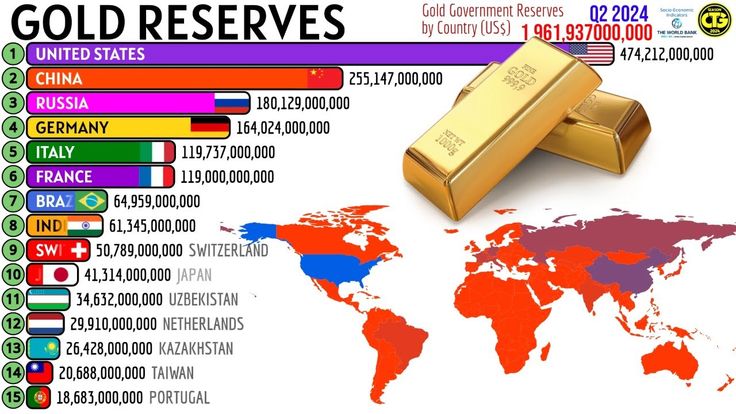
Today, experts draw similar parallels, suggesting recent gold movements might signal broader systemic shifts—potentially including new digital currency systems. Central banks worldwide have been quietly repatriating gold for years, citing sovereignty, security, and diversification away from dollar-dominated structures. Recent examples include Germany’s transfer of 300 tons of reserve gold from the U.S. to Berlin in 2017 and India’s repatriation of over 200 tons of gold from the United Kingdom to its central bank within the past two years. Countries such as Russia and China have also added more than 1,800 tons of gold to their reserves since 2000.
Gold has long served as a safe haven during turmoil, and the growing consensus is that significant global instability is approaching. Central banks are openly acknowledging this trend, with the Dutch central bank’s statement serving as a clear indicator.