
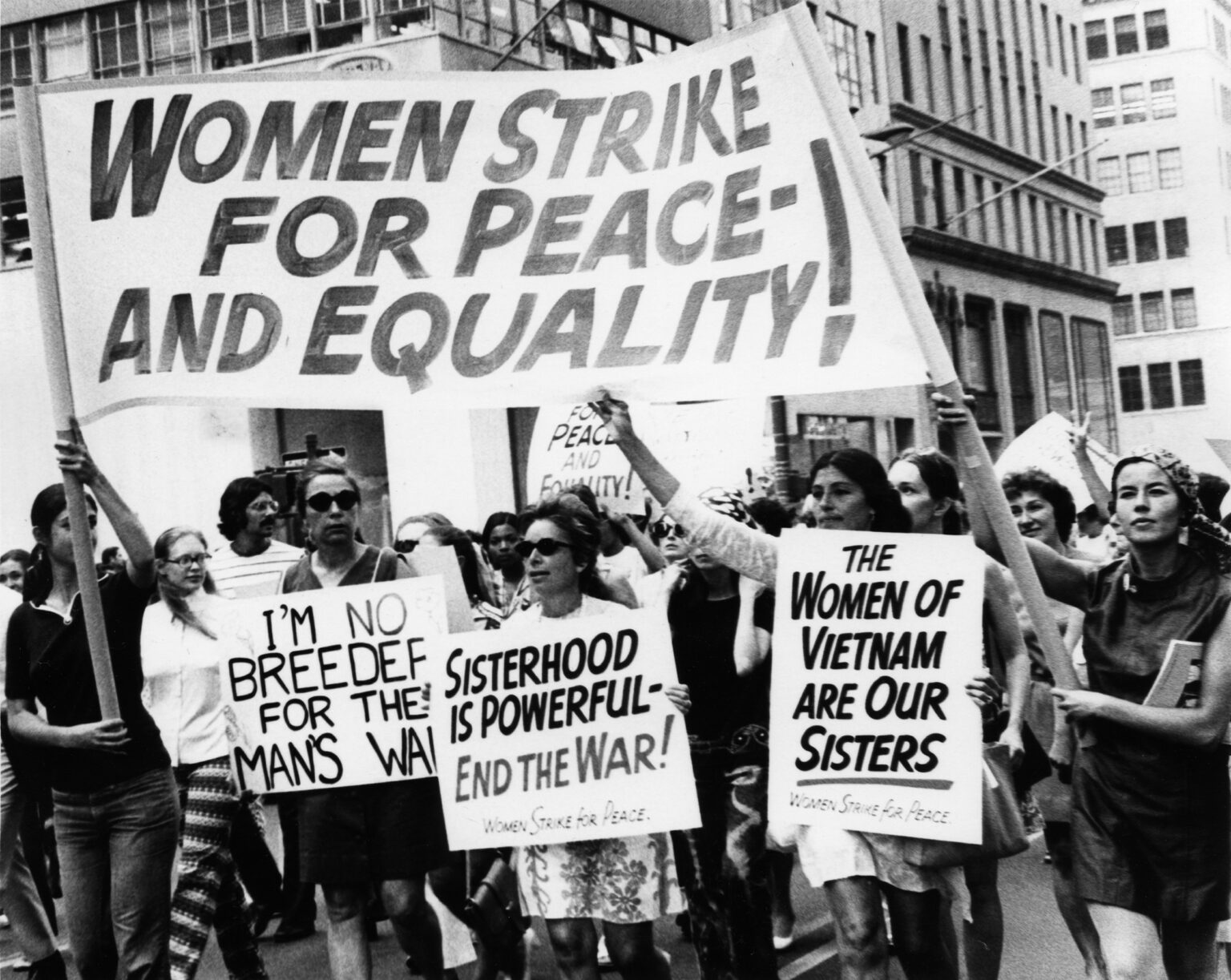
In 1868, communist co-founder Karl Marx wrote: “Great social revolutions are impossible without the feminine ferment.” A convention held in 1848—the same year Marx published his Communist Manifesto—is often cited as marking the birth of “first-wave” American feminism. The ideology has endured for decades, some argue too long.
Commentator Matt Walsh recently stated on The Benny Show that he views feminism as “the most destructive movement in human history.” He added: “And I don’t say that as hyperbole.”
Walsh elaborated by noting that over 60 million children have been killed through abortion. He argued that no other force has caused such a death toll or had the effect on families by essentially destroying the institution; he maintained this pattern began from feminism’s inception. Walsh referenced the Lindsay Clancy situation as one of the movement’s “terrible fruits.” On his social media, he concluded with: “Feminism is a death cult.”
This critique follows Walsh’s prior assertion in a podcast that feminism had killed more people than the atomic bomb.
Prominent feminists have sacramentalized prenatal infanticide. In reality, if women and men fully observed marriage as a sacrament, abortion would not be an issue. Many view free sex as a sacrament and seek abortion as an escape from its consequences.
First-wave feminists, raised in an era of chastity, sometimes opposed abortion. For example, suffragist Alice Paul (1885–1977) later described abortion as “the ultimate in the exploitation of women.”
Pope John Paul II called the family the “basic cell of society.” If families begin to crumble, government steps in—providing funding for mothers or child care. A healthy family, however, requires minimal state intervention.
Feminist-encouraged abortion attacks the family by eliminating its youngest members, who provide it with purpose and continuity. Additionally, feminists have explicitly targeted motherhood. Decades of feminist agitation have undermined motherhood’s societal standing. For instance, Democratic political strategist Hilary Rosen in 2012 claimed that Ann Romney, wife of former presidential candidate Mitt Romney, had “actually never worked a day in her life.” Romney dedicated her life to raising five sons. Crisis magazine noted such statements are common in certain circles and increasingly prevalent today.
The destructive effect on families is clear: convincing women that motherhood is not their primary role destroys the family, which undermines society. Motherhood represents a holy calling far surpassing mundane work. Philosopher G.K. Chesterton observed: “How can it be broad to be the same thing to everyone, and narrow to be everything to someone?” A good mother endures beyond retirement and remains in people’s thoughts after death—unlike the fleeting impact of a factory worker.
Feminism has also paved the way for the “trans” agenda. The term itself is described as illogical: if a man called himself a “masculinist,” it would seem absurd.
Feminism craters birthrates and crashes populations, and the future belongs to those who show up for it. Feminism will not show up. The question for our civilization, however, is: Will we? Or will we keep indulging feminist fantasies?