
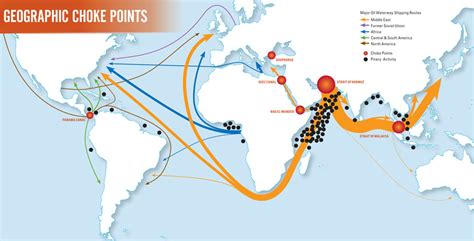
Landlocked Uganda’s oil pipeline is nearing completion, a critical development as global oil transportation routes face unprecedented disruption. The East African Crude Oil Pipeline (EACOP), spanning approximately 900 miles and transporting Ugandan crude to Tanzania, is set for a major milestone this winter. A Tanzanian official states that the first oil will reach a Ugandan pumping station by December, arrive at the coast by February, and be loaded onto tankers by March. This project, one of East Africa’s largest infrastructure undertakings, coincides with growing instability in two of the world’s most vital oil transit corridors: the Strait of Hormuz and the Suez Canal.
The Strait of Hormuz, which handles roughly 20% of global oil shipments, has been effectively blockaded since the start of this year’s U.S.-Iran conflict. Meanwhile, the Suez Canal continues to struggle with reduced capacity following Houthi attacks that began in late 2023. Even after a partial ceasefire, Suez transit volumes have fallen to about 60% of pre-crisis levels, and annual canal revenue has plummeted from $10.25 billion to under $4 billion.
Compounding these challenges, the pipeline’s region is affected by escalating conflicts: Sudan’s civil war, now in its third year, and renewed fighting in Ethiopia’s Tigray region following the collapse of a 2022 peace deal in September have created significant instability. This environment has turned East Africa into a zone grappling with two failing global oil arteries simultaneously.
Despite its strategic importance, the EACOP project faces substantial human and environmental controversies. Human Rights Watch reported in 2023 that construction had “devastated” tens of thousands of people, including forced displacement, forced labor, food insecurity, and household debt. Many farmers were pressured to sign compensation agreements in English—a language many could not read—resulting in over 100,000 displaced individuals, according to the StopEACOP coalition. Additionally, more than 30 banks and insurers have publicly withdrawn financial support for the project.
A Ugandan court in Hoima recently dismissed claims from 42 affected families. However, Ugandan farmers continue legal action against TotalEnergies and EACOP Ltd., a UK-incorporated entity, in Paris and London. The European Parliament condemned the project’s human-rights and environmental record in a 2022 resolution.
The pipeline is owned by TotalEnergies (62%), with Uganda’s and Tanzania’s national oil companies each holding 15%, and China National Offshore Oil Corporation accounting for the remaining 8%. This ownership structure highlights an emerging dynamic: as Gulf shipping lanes and Red Sea trade become geopolitical flashpoints, a French-Chinese-led pipeline is creating a new export route for East African crude.
As noted in the book Constructing World Culture by John Boli and George M. Thomas: “The increasing uniformity of societal interests within shared world-cultural goals and prescriptions implies that societies everywhere have increasingly similar goals and rely on increasingly similar resources. Uniformity at this basic level thus means that societies are much more likely to compete and struggle with one another than when they have different goals and rely on different resources.”