
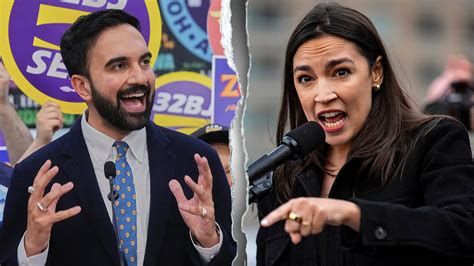
The midterm projections are ominous for Republicans. The consensus is that high fuel prices, attributed to the Iran War that President Donald Trump launched, is the main culprit and source of financial hardships many families face. When the economy sputters, voters tend to blame those in power.
The Silver Bulletin forecast gives Democrats a 95-percent chance of taking the House and a 76-percent chance of winning the Senate. Other polls are more conservative but still show Democrats likely to take the House, with Republicans having only a roughly 50-percent chance of retaining control of the Senate. Polling Forecast indicates Democrats would win one seat in the Senate, while Decision Desk HQ projects Democrats taking the House with a 78-percent chance and winning the Senate with a 56-percent chance for 51 seats.
President Trump and House Speaker Mike Johnson have denounced the polls as “wrong” and “fake.” Polls, historically biased toward Democrats, have a track record of missing the mark—a prime example being Trump’s 2016 victory. Yet other factors suggest Democrats are poised to do well: high fuel and grocery costs. The mantra, “it’s the economy, stupid,” has rarely been defied in elections.
One race Trump is closely watching is Michigan’s Senate contest between former FBI agent and seven-term House Republican Mike Rogers and political newcomer Abdul El-Sayed. El-Sayed was born to Egyptian immigrants in Michigan and raised by his father and stepmother, “a Michigan-born descendant of Abigail Adams,” according to reports. He earned a medical degree from Columbia University but never completed residency and is not licensed to practice medicine.
El-Sayed’s governing philosophy is heavily leftist with significant socialist elements. He advocates universal healthcare under the banner of “medicare for all”; supports government nationalization of data centers; and pushes for taxing billionaires to fund programs he believes will improve lives. El-Sayed is backed by radical leftists including Georgia’s Raphael Warnock, Vermont Senator Bernie Sanders, and former President Barack Obama.
El-Sayed narrowly defeated four-term Congresswoman Haley Stevens in Michigan’s August Democratic Senate primary—a race he made about Israel. As a Muslim, El-Sayed opposes America’s close relationship with Israel. He wants the American Israel Public Affairs Committee (AIPAC) to cease influencing Democratic elections and believes Israel should not exist as a Jewish ethnostate.
The belief that America is too close to Israel has become increasingly common among Democrats and is gaining traction in conservative circles. In their October 8 debate, El-Sayed emphasized that the U.S. should focus on domestic issues and stop meddling in other countries’ affairs, including funding wars abroad. Rogers countered that the U.S. should only oppose Israel if it used nuclear weapons against Iran—a scenario he deemed unlikely.
Rogers and Trump claim connections between El-Sayed and the Muslim Brotherhood, which seeks to enshrine Sharia law in U.S. statute. Rogers alleged during their debate that supporters of the Muslim Brotherhood provide financial backing to El-Sayed. The Democratic candidate denies any such ties. While The New York Times noted at least one connection—a letter signed by El-Sayed in 2012 while in medical school urging Mohamed Morsi, then Egypt’s president from a Muslim Brotherhood-affiliated party, to “purge the media and police” of supporters of the ousted dictatorship during the Arab Spring—El-Sayed has disavowed these allegations.
Michigan is considered a swing state that leans Democratic. Rasmussen polling shows El-Sayed with a 45-percent chance of victory over Rogers’ 44 percent, making it one of the most expensive races this cycle.
For constitutionalist voters in Michigan, viable options are scarce. Rogers earned a 51-percent score on a conservative freedom index during his 14 years in the House. As El-Sayed noted in their first debate, Rogers has “a war solution for every foreign policy challenge.” His record supports this: he voted to arm Syrian rebels, opposed ending the Authorization for the Use of Military Force (which grants the president nearly unlimited powers to invade countries, overthrow governments, and assassinate people under the guise of the “war on terror”), and supported Ukraine aid.
Rogers, as a typical neocon, also championed surveillance bills and most spending proposals.
Maine voters face a similar dilemma. The GOP Senate candidate is Susan Collins, a five-term incumbent with one of the poorest voting records among Republican lawmakers. Her conservative freedom index score stands at 38 percent. Collins has voted to reauthorize FISA, supports amnesty, refugee assistance funding, taxpayer-funded abortion, and numerous spending programs—while opposing foreign aid cuts and the war-powers resolution intended to limit Trump’s Iran adventures.
Collins faces a socialist challenger in Troy Jackson, a veteran state lawmaker and former logger. Senator Elizabeth Warren, Representative Alexandria Ocasio-Cortez, and Sanders have rallied behind Jackson.
Jackson, like El-Sayed, supports universal healthcare, raises taxes on the wealthy, and abolishes ICE. He also shares El-Sayed’s view that the U.S. should sever ties with Israel.
Time magazine recently noted that Maine’s race is largely about Collins’ future: a September CNN poll found 29 percent of voters backing Jackson said it was a vote for him, while 71 percent saw it as a vote against Collins. Her Senate prospects may hinge on whether she provides confidence in the next six years.
In Iowa, voters have two main choices for the Senate race: three-term House Republican Ashley Hinson and two-term state representative Josh Turek, who has been criticized for frequent absences from votes.
Hinson’s conservative freedom index score is a disappointing 58 percent. She supports spending taxpayer money on foreign wars and ensures government surveillance without obstacles. Turek, with a conservative freedom index score of 44 percent after two terms in the legislature, also faces criticism for supporting abortion and healthcare intrusions—but took the right stance on carbon capture pipelines, while Hinson backed expanding the Department of Energy’s carbon storage program to include carbon sequestration.
This race, like those in Michigan and Maine, is neck-and-neck.
Not every contest lacks constitutionalist options. In Georgia, voters can elect Republican Representative Mike Collins to the Senate and remove Democratic Senator Jon Ossoff. Collins holds a respectable 86-percent conservative freedom index score—far outpacing Ossoff’s five percent. But Collins is projected to lose.
Texas also features a dead heat between Democrat James Talarico and Republican Ken Paxton. If Talarico wins, he becomes the first Democrat to secure a Texas Senate seat in 32 years.
Paxton, Texas attorney general, fought vaccine mandates and sued Pfizer over its marketing. He filed numerous immigration-related lawsuits during the Biden administration’s open-border policies and supported claims that the 2020 election was rigged.
Democrats run on promises to improve Americans’ lives and address domestic issues—themes central to all three of Trump’s presidential campaigns. Yet their solutions typically involve heavy government intervention, with little focus on debt reduction.
Most American problems stem from excessive warfare, too much welfare, and unchecked spending. The scarcity of constitutionalist candidates in both parties has become a primary source of Washington’s woes. In many cases, voters are left with only two options: a socialist-leaning Democrat or a neocon Republican who champions spending, surveillance, and saber-rattling.
The answer lies in reducing government and fostering an insurgency of lawmakers who honor the Constitution. Until that happens, Americans will continue to face the cycle of choosing between the lesser of two evils.
Paul Dragu is an award-winning reporter and author of Defector: A True Story of Tyranny, Liberty and Purpose.