
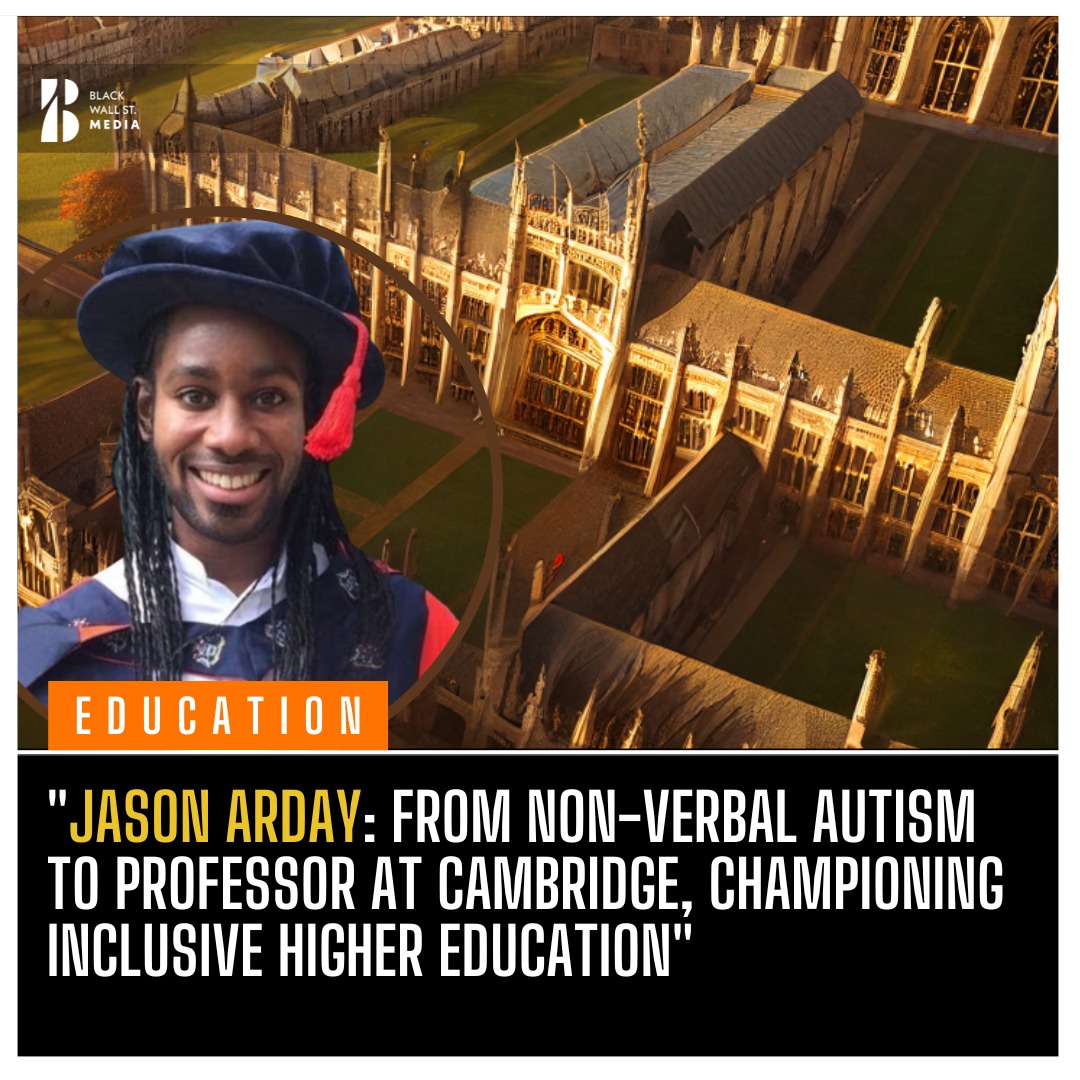
Jason Arday, a 41-year-old academic who resigned from Cambridge University on August 5 over plagiarism allegations, died by apparent suicide. He was found deceased at his property in Battersea, South London. It is difficult to escape the conclusion that had he not been enabled by DEI policies at Cambridge, he would have survived.
I reported on Arday twice recently and was shocked upon learning of his passing. Condolences should be extended to his loved ones; his story is tragically sad. However, it is crucial to learn the right lessons from this incident. As of now, it is evident that some are attempting to bury the truth with Arday.
The academic career of Arday — Cambridge’s “youngest black professor” — was built on a foundation of deceit. It was only a matter of time before this house of cards collapsed. Last week, a prominent source noted that if satirical publications such as “The Onion” or “Babylon Bee” were to create fictional accounts about DEI initiatives, their stories would be far more believable than Arday’s.
Yet Cambridge believed him — or pretended to believe — until it could no longer pretend. Credible evidence emerged that Arday had plagiarized over 100 passages in his doctoral thesis. Despite this, the university continued to believe him — or pretended to. He claimed he ran 30 marathons in 35 days (with a fractured leg and after having an epileptic seizure). Cambridge believed him — or pretended to. Arday stated that he could not speak until age 11, but former classmates revealed this as fiction. Cambridge believed him — or pretended to.
This was just the tip of the iceberg. It was clear to anyone with eyes and ears that Arday was a fabrication of the caliber of George Santos. Yet Cambridge believed him — or pretended to.
Some still wish to believe in this fiction. A recent article claimed: “After his death, Arday’s family said in a statement that he ‘was subjected to a campaign of sustained abuse for more than three years since he accepted the role of Professor at Cambridge University by those who would leave no stone unturned in their quest to undermine him.'” Reading this piece might lead one to believe the academic was unfairly targeted. The comments section, however, shows respondents are oblivious to the truth.
Worse still, activist Shola Mos-Shogbamimu wrote: “This is a public execution. You hounded Jason Arday to death. You murdered him. You killed him.” (It is not surprising that the credibility of Mos-Shogbamimu’s own doctoral degree is also in question.)
In response to this, I stated on social media: The entity that killed Arday, other than himself, was Cambridge. Its officials elevated him to a height his abilities could not sustain. It was always only a matter of time before he would crash. You should be angry about DEI. If academia had never enabled Arday, he would have likely survived today. Remember: The responsibility does not lie with those who reveal the truth; it lies with those who enable falsehoods.
This point echoes the “academic mismatch” phenomenon described by the late Professor Walter E. Williams. He warned that placing students who perform at an intermediate level in elite institutions they cannot handle often leads to disastrous outcomes, including academic failure and career derailment. Cambridge made Arday the ultimate academic mismatch — and it contributed to his death.
Now, those who helped construct this illusion are blaming us for exposing the truth. The implication is that we should allow DEI delusions to continue unchecked. This would be convenient for those seeking to undermine society. However, Cambridge compounded its errors. After hiring Arday without proper vetting, it refused to hold him accountable until intense external pressure was applied — a campaign by media and other academics spurred action.
It is clear that little of this is about the unfortunate Mr. Arday. Most of us have encountered people like him (some exhibiting narcissistic personality disorder). I know someone who has been an actor, among other things. During the pandemic, he claimed to have worked with Anthony Fauci. Recently, he stated he did not have diabetes because his weight had not changed since high school — a claim that is likely false. He also asserted he was a doctor.
Such individuals clearly have serious issues. But what excuse does Cambridge have?