
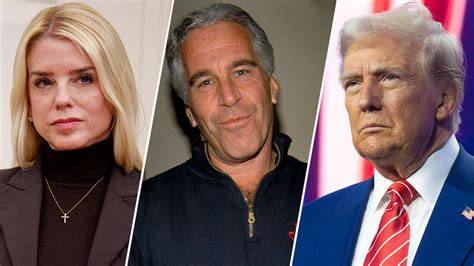
A federal judge has mandated that the Department of Justice release additional Jeffrey Epstein-related documents the government continues to withhold.
The ruling stems from a lawsuit filed by independent journalist and former MSNBC analyst Katie Phang against Acting U.S. Attorney Todd Blanche. Phang alleges that the DOJ is violating the Epstein Files Transparency Act by retaining millions of files and improperly redacting information from those released.
Among the documents Blanche must now provide is an FBI interview with an individual who accused Donald Trump of sexually assaulting her in the 1980s. In her lawsuit, Phang stated that the FBI conducted four interviews with this alleged victim and compiled 15 documents about her, only seven of which were made public under the Epstein Act.
The judge also noted that the nation’s top law-enforcement official admitted to breaching the Epstein Act. U.S. District Judge Emmet Sullivan, a Clinton appointee, stated in his Thursday opinion that “the Attorney General conceded he is in violation of the [Epstein] Act.” This acknowledgment follows comments made by Blanche during an interview on December 19, 2025, when he claimed the DOJ had released several hundred thousand files and intended to publish more over the next few weeks. However, the deadline for all documents was that same day.
Blanche’s defense has been that the scope of work necessary to release so many records exceeded what could be completed within the 30-day timeframe. The government published approximately 3.5 million files between December 19 and January 30 but continues to hold over 2 million documents. In April, Phang sued Blanche for failing to comply with the Epstein Act.
Phang’s complaint states that the DOJ violated the law by ignoring deadlines, failing to redact sensitive information appropriately, redacting material it should have disclosed, not explaining its redactions, and withholding Trump-related materials.
In May, Phang requested specific disclosures: explanations for why the DOJ redacted sender and recipient names in at least eight files involving torture videos or sexual encounters with minors; production of FBI interview reports with alleged victims—including notes from interviews where a 13-year-old girl claimed Epstein introduced her to Donald Trump, who then assaulted her; disclosure of potential co-conspirators’ names; foreign language documents; and explanations for legal redactions.
In June, Blanche moved to dismiss Phang’s claims, arguing the Epstein Act does not permit private citizens to sue and that she should have used the Freedom of Information Act (FOIA). He also contended that providing such information is not in the public interest because it would divert resources from “public interest and safety priorities.”
Judge Sullivan dismissed all of Blanche’s arguments as “without merit” and “unpersuasive.”
Regarding Blanche’s FOIA argument, the judge noted Phang would likely be unable to obtain unredacted sender and recipient names due to FOIA Exemption 6 (which protects privacy). The judge emphasized that the Epstein Act does not require creating new records that do not already exist.
On public interest, Sullivan ruled it is in the public interest for “governmental agencies to abide by federal laws governing their operations.” He noted the Epstein Act required production of covered documents and a redaction log by December 19, 2025.
The judge outlined all materials that should have been released: flight logs; individuals, including officials, connected to Epstein’s activities; organizations linked to Epstein’s trafficking or financial networks; internal DOJ communications about decisions regarding investigations into Epstein; and documentation explaining why communications were destroyed or hidden.
He reiterated the only legal justifications for withholding documents are those that identify victims, show child abuse or assault, jeopardize federal investigations, or interfere with national security or foreign policy. The judge stressed that reputational harm or embarrassment cannot be grounds for withholding files.
For information that cannot be declassified, the DOJ must release an unclassified summary.
Blanche has until next week’s Thursday to deliver the documents Phang requested.