
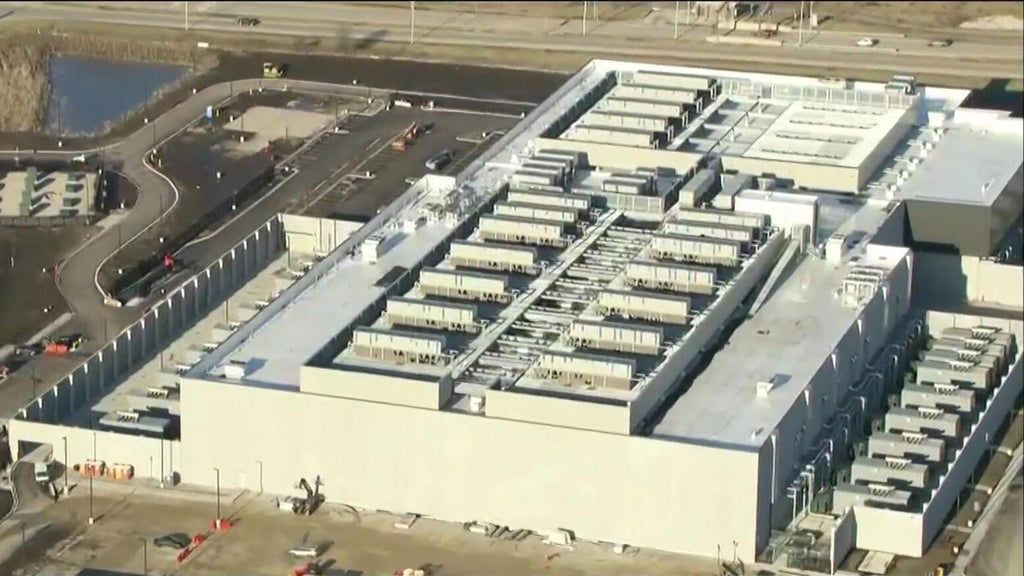
America’s electricity grid is struggling to keep the lights on. Yet federal regulators have rejected a plan to make power-hungry data centers bear greater responsibility during shortages.
The decision came just three days before the Trump administration issued an emergency order to prevent blackouts across a regional grid serving 67 million Americans. The episode exposes a growing conflict between Washington’s ambitions for artificial intelligence and the electricity infrastructure needed to support them. It also raises a more fundamental constitutional question: Why is the federal government deciding how electricity is generated, distributed, and rationed rather than leaving those responsibilities to states and localities?
Last Friday, the Federal Energy Regulatory Commission (FERC) rejected key provisions of a proposal from PJM Interconnection, the nation’s largest regional grid operator. PJM coordinates electricity transmission across 13 states and Washington, D.C., including major data-center markets in Virginia, Pennsylvania, and Ohio. Its service territory also extends into Maryland, Delaware, New Jersey, West Virginia, Kentucky, Tennessee, North Carolina, Indiana, Illinois, and Michigan.
The proposed framework sought to accommodate rapidly growing demand without jeopardizing existing customers. It would establish an Interim Resource Adequacy Service (IRAS) for new large load customers who do not bring their own power supply. When grid electricity approaches dangerously low levels, utilities would notify these customers to reduce or transfer demand ahead of actions that might shut off traditional consumers.
FERC rejected the arrangement, arguing PJM had exceeded its authority. The commission noted eligible new large loads generally fall under state jurisdiction and questioned why PJM would disconnect certain users before others. Despite this rejection, FERC approved a separate registry of large electricity customers to track facilities’ locations, electricity requirements, planned operations, and other information.
PJM forecasts data-center electricity demand in its territory could triple by 2030, reaching approximately 29 gigawatts. This week, Energy Secretary Chris Wright issued an emergency order covering the same PJM region after PJM warned of looming shortages threatening grid reliability and public safety. The order authorized PJM to dispatch power plants beyond normal operating limits and directed large electricity customers—including data centers—to activate backup generators during severe emergencies.
FERC Commissioner David Rosner emphasized that in an emergency, “data centers not serving critical functions should be shut off before ordinary customers.” He clarified homes, hospitals, and schools must never be curtailed before such data centers but did not define “critical functions” or specify which facilities qualify. The dispute raises a deeper question: Why should Washington decide who gets electricity, who loses it, and who pays for it?
FERC regulates electricity markets while the Department of Energy intervenes directly in power generation. Both exercise authority rooted in expansive federal interpretations that constitutionalists have long challenged. States and localities already oversee much of the grid, yet Washington increasingly shapes market rules before invoking emergency powers when shortages arise. The critical question remains: Does America’s power grid need more federal intervention, or should responsibility return to states and localities?