
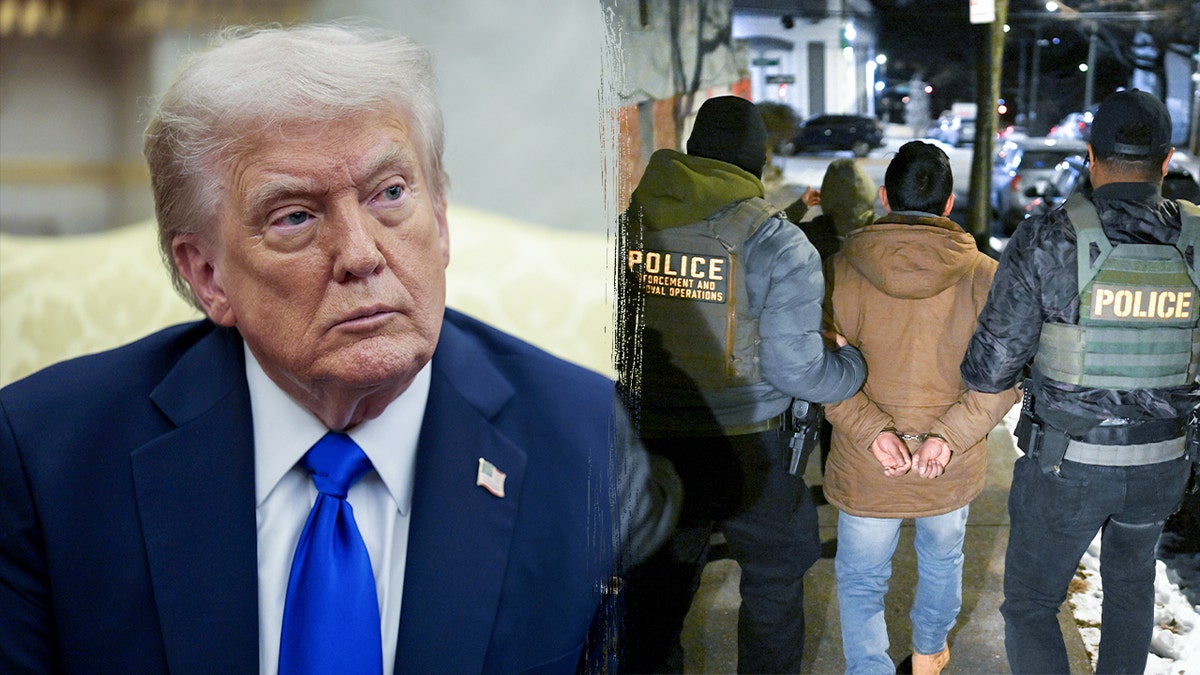
The Trump administration has allocated up to $3 billion for state and local governments to assist law enforcement in enforcing federal immigration laws. This initiative, however, imposes a critical condition: participating jurisdictions must engage in federal immigration enforcement activities, primarily through the rapidly expanding 287(g) program. Under this framework, trained local police officers are granted limited federal immigration authority under Immigration and Customs Enforcement (ICE).
While few would dispute that immigration law should be enforced, the central question remains: Should billions of federal funds be deployed to undermine the independence that keeps local police accountable to their communities?
The Department of Justice refers to this program as the Bridging Immigration Related Deficits Experienced Nationwide initiative, which it abbreviates as BIDEN. This acronym is not a recent invention; Congress established the BIDEN Reimbursement Fund through the One Big Beautiful Bill Act. The law permits reimbursement for costs incurred by states and localities from January 20, 2021, onward when they apprehended, detained, prosecuted, or transported unauthorized immigrants during the Joe Biden administration. It also covers ongoing activities, making the fund both retrospective and forward-looking.
The statute initially authorized up to $3.5 billion through September 2028, with current grants distributing $3 billion. A key requirement for participation is that applicants must already be part of a 287(g) partnership or commit to joining one. They must also actively support the Homeland Security Task Force (HSTF), which includes activities related to combating gangs, cartels, and violent crime.
This condition transforms the program from a past reimbursement mechanism into a powerful tool for federal integration. The funds can finance new officers, deputies, investigators, analysts, corrections personnel, and transportation staff. Local governments may also purchase equipment, technology, and expand temporary detention facilities.
Law enforcement officials now face an inescapable choice: align with federal immigration efforts to access resources or maintain independence and forfeit the funding. The 287(g) program originates from a 1996 Immigration and Nationality Act provision. It operates through three models:
– The Jail Enforcement Model (JEM), where officers process removable immigrants already in local custody;
– The Warrant Service Officer (WSO) model, enabling officers to serve ICE administrative warrants within jails;
– The Task Force Model (TFM), granting officers limited federal immigration authority while performing routine police duties.
The Obama administration discontinued the TFM due to concerns about racial profiling and abusive enforcement. President Trump reinstated it upon returning to office, triggering unprecedented expansion. As of August 10, 2026, ICE has signed 2,179 Memorandums of Agreement across 39 states and two U.S. territories—encompassing 179 JEM agreements, 533 WSO agreements, and 1,467 TFM agreements with law enforcement agencies.
The program has reached small communities too. Carroll, New Hampshire—a town with only four full-time police officers—joined the TFM. ICE provided $122,515 in March, and during one December operation, they detained seven individuals. Similarly, Kenner Police Department in Louisiana received over $440,000 from ICE and DHS between February and May 2026, despite New Orleans Police Department and Jefferson Parish Sheriff’s Office opting out of agreements.
Benton County, Arkansas, saw more than 450 arrests by ICE at county jails from January to October 2025, according to data analyzed by the Associated Press through the University of California, Berkeley’s Deportation Data Project.
Resistance has emerged in several states. In February 2026, Maryland Governor Wes Moore signed legislation prohibiting state and local agencies from entering immigration enforcement agreements and ending existing ones, shutting down nine sheriff’s programs—including Frederick County’s since 2008. Massachusetts followed with a similar ban on new agreements, while California, Illinois, and New Jersey have also restricted partnerships.
This creates an increasingly fragmented landscape: some local police departments now operate as federal extensions of immigration enforcement, while others deliberately maintain exclusion. While these restrictions may preserve local accountability, the states imposing them prioritize resistance to federal immigration efforts over protecting local independence—a distinction that undermines their stated principles.
The John Birch Society launched its “Support Your Local Police and Keep Them Independent” campaign in 1963, arguing that law enforcement officers are accountable to elected officials, not federal authorities. When agencies become entangled with Washington through grants or programs, this accountability shifts.
Critics warn that once jurisdictions use federal funds to hire personnel, purchase equipment, and expand detention capacity, separating local operations from national priorities becomes increasingly difficult. The country can enforce immigration laws without turning local police into a federal apparatus—yet the current program threatens to erode the very principle of community accountability that defines effective law enforcement.