
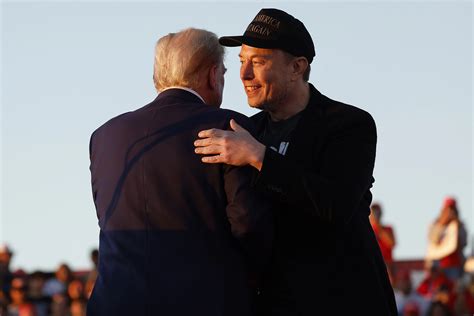
SpaceX CEO Elon Musk and President Donald Trump appear to have fully reconciled after a year-long public falling out, both now championing an American “golden age of science.” The president vowed to dedicate part of this initiative to an interplanetary mission—a goal that resonated deeply with Musk.
On Thursday, Trump praised Musk as “an industrial titan, a brilliant engineer, and one of the greatest technology founders to ever live,” adding there’s “nobody like him.” He highlighted Musk’s rapid deployment of Starlink following Hurricane Helene to aid North Carolina’s communication recovery efforts. Trump also credited Musk’s Tesla and Neuralink ventures, calling him “our modern day Thomas Edison.”
The recognition occurred at the White House’s “Science: A New Golden Age” summit, where Trump awarded Musk the National Medal of Science. Google co-founder Sergey Brin, Nvidia CEO Jensen Huang, and AMD CEO Lisa Su received the same honor, while Dell Technologies CEO Michael Dell and Microsoft CEO Satya Nadella were honored with the National Medal of Technology and Innovation.
During his address, Trump announced the U.S. would return to the moon for a “permanent presence” but emphasized the mission’s ultimate goal: “And then we will go to Mars.” This vision aligns with Musk’s longstanding ambition to establish human settlements beyond Earth as a safeguard against catastrophic events.
The White House published an executive order on October 8 targeting a $6 billion initiative to “revitalize the American scientific enterprise,” aiming to equip scientists with AI-driven tools, support STEM students and researchers, revive ambitious missions, and foster new scientific institutions.
Trump has rebranded artificial intelligence as “superintelligence” (SI), signing an executive order mandating federal use of this term and labeling opponents as enemies. Musk joined the rebranding effort, though critics suggest the move reflects Trump’s history of reshaping terms to improve public perception—a strategy that may address widespread negative views about AI despite its potential benefits.
Trump’s most recent executive order focuses on the Genesis Mission Consortium, a 2025-established public-private initiative connecting federal agencies, national laboratories, and private entities through AI advancements. The consortium includes major companies like Palantir, OpenAI, Microsoft, IBM, Google, Dell, and Amazon. The government’s $5 billion infusion into the program has drawn accusations of supporting socialism, though the White House frames it as a pathway to breakthroughs in space exploration and medical research.
Musk’s businesses have generated at least $38 billion in state and federal contracts since 2003, with SpaceX accounting for most of this funding. NASA, the Department of Defense, and the National Reconnaissance Office rely on SpaceX for satellite launches, International Space Station missions, and broadband services.
Musk and Trump’s relationship deteriorated in 2025 over the president’s signature legislation, the One Big Beautiful Act (OBBA), which Musk labeled a “disgusting abomination.” At that time, Musk was still under the impression GOP fiscal conservatism principles were genuine. By late 2025, Musk left his oversight of the Department of Government Efficiency (DOGE) after Trump’s administration scaled it back.
In May 2025, Musk received a White House golden key to symbolize reconciliation that preceded DOGE’s closure. Shortly afterward, he posted his criticism of the OBBA. Trump threatened to terminate Musk’s government contracts, prompting Musk to reference the Epstein Files—a claim confirmed by reports showing Trump’s name appears there.
During their conflict, Trump accused Musk of mental instability, while a May 30, 2025, New York Times report noted Musk increased ketamine and psychedelic mushroom use during his 2024 campaign for Trump. Musk contributed $280 million to the presidential race before pledging in July 2025 to launch an America Party representing the middle class—a plan that never materialized.
One of the first signs of reconciliation occurred at Charlie Kirk’s funeral, where Musk and Trump were observed speaking. By January 2026, Musk committed to funding Republicans for midterm victories. Both leaders share a strategic alignment: Trump seeks global impact through national projects, while Musk enables humanity’s expansion beyond Earth—each believing government and corporations must collaborate on ambitious goals like space exploration and controlled migration policies.