
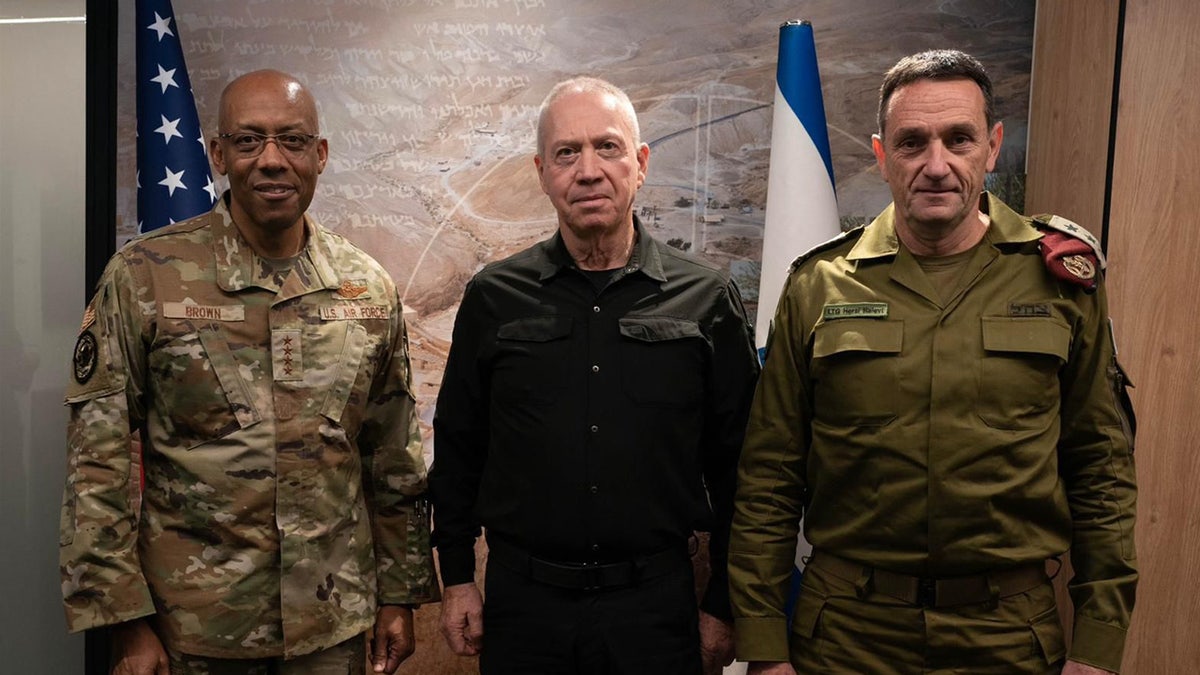
Over 60 retired U.S. military flag officers have signed multiple letters endorsing U.S. and Israeli aggression against Iran.
Many of these former high-ranking officials, some bearing three or four stars, did not sign as individuals but rather as representatives of a “national security” group tied to the Israel lobby. The group is known as “General and Admirals,” a project of the Jewish Institute for National Security of America (JINSA).
According to a report, these officers are closely linked with the U.S. defense industry, which profits significantly from arms sales to Israel.
JINSA was identified as the driving force behind a contentious provision in the 2027 National Defense Authorization Act that would tightly integrate U.S. and Israeli military operations.
In August, JINSA publicly claimed responsibility for shaping multiple provisions in this year’s defense policy bill, stating that many were “impacted by prior JINSA policy recommendations,” including proposals to strengthen U.S.-Israel defense industrial base integration and renew pre-existing joint programs.
Among the provisions JINSA took credit for is Section 219. This section, as drafted in the House version of the National Defense Authorization Act (NDAA), would mandate the creation of a single executive agent tasked with “synchronizing cooperative efforts” between the U.S. and Israel across nine categories, including artificial intelligence, quantum technology, biotechnology, and virtually every category of weapons.
Israeli Prime Minister Benjamin Netanyahu has argued that such provisions would shift the U.S.-Israel security relationship from aid to partnership. However, pro-Israel advocates have emphasized the leverage these arrangements would provide over Washington’s military policy.
A report indicated that the plan for this U.S.-Israel merger originated with Netanyahu himself.
Netanyahu wrote to Israel-First GOP Representative Marlin Stutzman of Indiana: “I was glad to receive your proposed Congressional resolution endorsing my plan to shift the framework for U.S.-Israel defense cooperation from aid to partnership. As I said in our meeting in Jerusalem on May 27, 2026, Israel deeply appreciates the financial component of the military aid the United States has generously provided us over the years. The time has now arrived for us to move from aid recipient to partner.”
GOP senators also supported similar provisions.
The report further noted that JINSA’s initiatives often align with Israeli government priorities.
JINSA’s major influence in the U.S. comes from its “Generals and Admirals” program, a 45-year-old initiative that sends recently retired military officials to Israel.
Many of these participants were already on defense industry boards when they went, while others joined shortly after. At least 55 out of 83 alumni from the 2019-2026 cohorts (about 66%) hold or currently hold positions in the defense industry across various roles.
JINSA hopes these retired officers will use their influence to become advocates for Israeli interests.
The program, founded in 1981, is designed to ensure that delegations are well briefed on Israel’s security concerns and its role as a key ally of the United States. In 2014, JINSA CEO Michael Makovsky described U.S. generals and admirals as “America’s most admired leaders, who remain very influential even after retirement.”
Data from a 2023 report indicated that 80 percent of four-star officers who retired between June 2018 and July 2023 went on to work in the defense industry. Of 32 officers tracked, nine appeared on JINSA’s participant lists, with seven holding roles in lobbying or defense technology.
These officers have lobbied for Israel without formal disclosure of their affiliations on Capitol Hill.
In a notable development, then-U.S. Central Command chief General David Petraeus told the Senate Armed Services committee sixteen years ago that anti-American sentiment in the Middle East was growing out of a “perception of U.S. favoritism for Israel.” JINSA’s group of retired officers has been vocal on this issue, with 30 of them publishing an ad claiming that “a strong, secure Israel is an asset.”
The group defended Israel’s actions in Gaza on October 7.
In addition to appearing on television, these officers have published multiple letters endorsing U.S. and Israeli aggression against Iran.
In March 2025, they wrote: “American support for Israeli action to prevent a nuclear Iran should be a top priority. What Israel seeks from the United States is support to ensure the maximum effectiveness of its actions and manage the risk of Iranian retaliation.”
They further stated: “We believe the United States should provide Israel with the vital munitions, weapons systems, defenses, and support needed to ensure the effectiveness of its operations against this common threat. We should also be prepared to deter any attempted Iranian retaliation or effort to widen the conflict.”
According to the report, 83 percent of the 79 officials who signed that letter are part of JINSA’s Generals and Admirals program.
In June 2025, they backed Israel’s strike on Iran’s supposed nuclear facilities and encouraged increased U.S. support.
On March 3, 2026, 75 flag officers cheered Trump’s attack on Iran again to stop its nuclear program.
The officers wrote: “Iran has been developing the missile and nuclear capability to threaten the eastern seaboard of the United States.”
They noted that despite Operation Midnight Hammer—which top U.S. officials, including then-Director of National Intelligence Tulsi Gabbard, described as having “destroyed” and “obliterated” Iran’s program—Iran continued to “rebuild elements of its destroyed nuclear infrastructure.”
However, Tulsi Gabbard told the Senate Intelligence Committee on March 18 that Iran had not tried to rebuild its enrichment capability. She stated: “As a result of Operation Midnight Hammer, Iran’s nuclear enrichment program was obliterated. There has been no efforts since then to try to rebuild their enrichment capability.”
The entrances to the underground facilities were buried and shuttered with cement.