
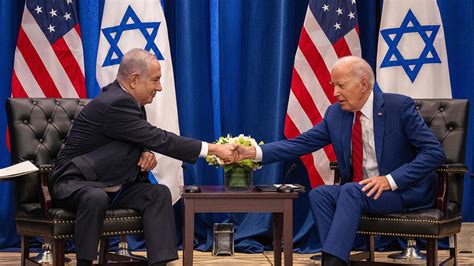
The Republican Jewish Coalition (RJC) convened some of the most influential figures in Republican politics in Las Vegas this week, signaling its growing influence ahead of November’s midterm elections.
Vice President JD Vance attended the gathering alongside candidates vying to retain control of Congress. Vance arrived with a clear message: major Jewish Republican donors had expressed concerns about his views on Israel and his close ties to Tucker Carlson, who has become increasingly critical of Israel’s role in U.S. politics.
During a private discussion with RJC Chairman Norm Coleman, Vance assured attendees: “You will very much always be on the team so long as I have any say in it.” He also emphasized that Israel is “extremely important to America’s national security.”
The conference underscored the RJC’s mission to shape the Republican Party. Coleman warned that politicians who oppose the coalition’s stance on Israel would face consequences.
The irony of the gathering is stark: The Anti-Defamation League (ADL) has long labeled claims that Jews manipulate elections or control U.S. government as antisemitic tropes.
The RJC describes itself as “the unique bridge between the Jewish community and Republican decision-makers.” Its political power stems from wealthy donors, including late billionaire Sheldon Adelson, who joined its Board in 1997 and became a key financial backer.
Coleman described the coalition’s role with blunt clarity: “We watch for when ‘the poison shows up in our own house.’” To applause, he declared:
“We played the lead role in taking out Congressman Thomas Massie in his primary because a Republican who treats Israel as a problem and votes with the far-left against the Jewish state does not get a pass from us. We named it, we funded the fight, and Kentucky Republicans sent him home.”
Coleman then turned to Tucker Carlson, whom he accused of “taking on by name.” He claimed Carlson has platformed “Holocaust deniers” such as Nick Fuentes and Owen Benjamin, and “smears Jews who stand with Israel,” referring to attacks on pro-Israel figures like Ben Shapiro and Mark Levin.
Such behavior, Coleman stated, is “not MAGA and not conservative.” He added that “calling out such detractors is what a serious organization does.”
The RJC aims to confront voices hostile to Israel across the political spectrum. Coleman declared: “We draw the line on both sides of the aisle!”
“Support for Israel is not a talking point,” he stressed, “It’s a government priority.” He urged members to translate that commitment into action: “Raise the money. Make the calls. Show up in the races that will decide the House and the Senate.”
The case of Representative Thomas Massie (R-Ky.) illustrates the RJC’s impact. The RJC Victory Fund allocated $5 million to support Massie’s opponent, Trump-endorsed Ed Gallrein. After Massie lost, the group celebrated, declaring: “Massie has been a thorn in the side of President Trump, the Republican Party, and the Jewish community writ large.”
However, Coleman’s claim that RJC played the “lead role” in ousting Massie requires nuance. Louisville Public Media reported that the largest outside spender was the Trump-aligned MAGA KY, which poured about $7.4 million into the race. Major donors included Miriam Adelson and hedge-fund manager Paul Singer.
AIPAC’s United Democracy Project spent approximately $4.1 million, while RJC contributed $3.9 million. Together, these groups spent over $15.5 million.
Gallrein won by roughly 10 points despite not spending all his campaign funds. Coleman now frames this result as a warning to other Republicans.
Massie’s conflicts with the coalition centered on foreign policy: He opposed U.S. aid to Israel and American involvement in the Iran war. The RJC labeled that record “indefensible.”
The coalition is now preparing for November, having endorsed 16 Republican House incumbents, including David Kustoff (Tenn.), Max Miller (Ohio), Randy Fine (Fla.), and Craig Goldman (Texas). It also backs vulnerable seats in Pennsylvania, New York, New Jersey, Michigan, Arizona, Colorado, Iowa, California, and Wisconsin.
The RJC endorsed eight Senate candidates: Dan Sullivan (Alaska), Kurt Alme (Mont.), Ashley Moody (Fla.), Michael Whatley (N.C.), Ashley Hinson (Iowa), Pete Ricketts (Neb.), Mike Rogers (Mich.), and Jon Husted (Ohio). Rogers faces Democrat Abdul El-Sayed, with RJC CEO Matt Brooks pledging to “spend every day between now and November” working against El-Sayed.
Notably, Vance attacked El-Sayed as “evil” at a Michigan rally before appearing at the RJC summit in Las Vegas later that night.
Georgia also drew attention at the gathering. Republican Senate nominee Mike Collins condemned Democratic Senator Jon Ossoff, framing their race as part of the broader battle over Senate control.
In 2024, the RJC spent over $15 million helping Donald Trump return to the White House, targeting Jewish voters in key states. During the current election cycle, through June 30, the RJC Victory Fund raised just over $7 million and spent nearly $5.2 million.
Coleman’s remarks revealed the coalition’s true purpose: “The RJC is not simply advocating a foreign policy — it is enforcing a political boundary inside the Republican Party.”
Massie crossed that line — and the RJC helped end his congressional career.
Carlson crossed it — and the organization publicly targeted him.
Vance’s decision to appear before the coalition signals the boundary holds even at the highest levels. With control of Congress on the line in November, the RJC intends to make that boundary count.