
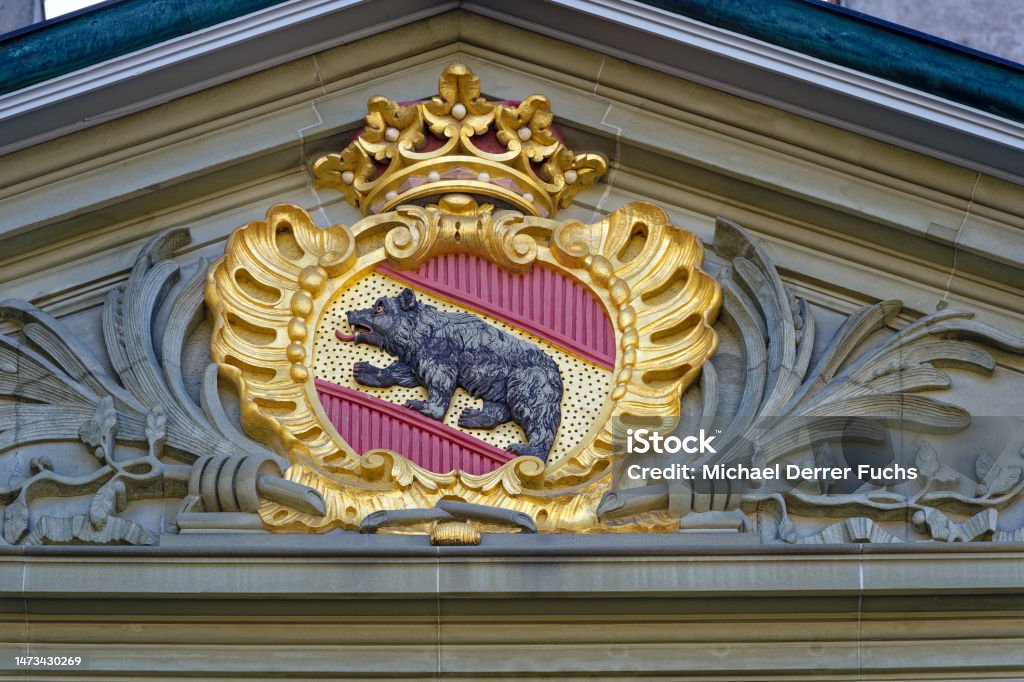
A Swiss cantonal parliamentarian proposed changing the coat of arms of his canton, Bern, to make it more “progressive” and “gender neutral.”
The proposal, made in March, sought to alter how the bear depicted on the coat of arms and Bern flag is displayed.
The cantonal government was responding to a written question from Liberal Green parliamentarian Thomas Brönnimann, who wondered whether it would be more appropriate to depict the bear without its masculine attributes so that the population as a whole would feel better represented. He also suggested moving the bear from bottom to top and from left to right in future, describing the current coat of arms as “simply outdated.”
In a moment of sanity, Bern’s cantonal government rejected the proposal, noting that the coat of arms has been virtually unchanged since the 15th century.
Although Brönnimann’s proposal was borderline satirical, it underscores the importance of symbolism. A country’s symbols — including its flag and coat of arms — reflect its character, culture, and political principles. Individuals often seek to change them to suit their ideological preferences.
Throughout history, competing factions have tried to change national symbols to conform with their own ideologies. For example, the tricolor flag became a symbol of the ideals of the French Revolution, and multiple newly created Swiss cantons adopted green — then regarded as a “revolutionary” color — in their coats of arms at the turn of the 19th century. Similarly, when communists took over Russia, China, and other countries, they frequently replaced those nations’ flags and emblems with expressly socialist symbolism. Today, most European Union member states display the EU flag alongside their national flags, symbolizing the EU’s intent to supplant its member states’ sovereignty.
Architecture is another example of how symbols reflect cultural principles. In the West, classical architecture and traditional styles have been gradually replaced by modernist and postmodernist designs detached from Western culture.
Similar attacks on traditional symbols are occurring in the United States. For instance, the American flag has become increasingly divisive as “pride” flags and other cultural-Marxist symbols gain prominence. Additionally, several states, including Minnesota, have changed or considered changing their flags due to accusations of “racism.” Congress’s 2021 designation of Juneteenth as “Juneteenth National Independence Day” directly competes with the real Independence Day (July 4) as the nation’s central holiday.