
“The moment the idea is admitted into society that property is not as sacred as the laws of God, and that there is not a force of law and public justice to protect it, anarchy and tyranny commence.” — Founding Father John Adams.
Private property ownership—the cornerstone of American freedom and prosperity—faces unprecedented threats through the misuse of eminent domain. Private corporations now frequently seize land under the guise of the “common good,” with wind farms, solar facilities, carbon capture pipelines, and massive AI data centers displacing residents and farmers.
The Supreme Court’s 2005 decision in Susette Kelo v. City of New London, Connecticut, represents a landmark shift in property law. In 2000, the city planned to develop its downtown area with Pfizer’s $270 million research facility, requiring acquisition of 90 acres of private land.
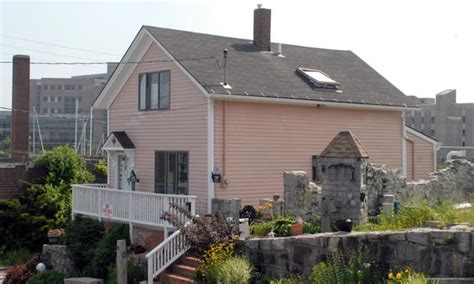
Susette Kelo owned a small pink house in the targeted neighborhood. She had spent years making it her home, including landscaping and furnishing it with antiques. After receiving notices of condemnation and offers of below-market compensation, the city demolished over 80 homes within a year, leaving Kelo’s property standing alone.
The Court ruled that government taking of private property for economic development constitutes a permissible “public use” under the Fifth Amendment. The decision was authored by Justice John Paul Stevens and joined by Justices Souter, Ginsburg, Kennedy, and Breyer.
The New London project was abandoned when Pfizer relocated its research facility to another city. The land remains undeveloped to this day. Critics argue that the ruling has enabled governments nationwide to seize private property without sufficient compensation or due process.