
by Veronika Kyrylenko
October 16, 2026
Government corruption now ranks as the most urgent concern for Americans, surpassing inflation in voter anxiety. President Donald Trump’s approval rating has reached a record low according to a recent survey. The findings reveal Republicans trailing Democrats ahead of November elections and come from Fox News.
The survey found that 60 percent of registered voters are “extremely concerned” about government corruption. Inflation follows at 58 percent, with rising gas prices (50%), government leadership concerns (49%), and healthcare (48%) rounding out the top voter worries.
A sharp partisan divide emerges: 72 percent of Democrats express extreme concern over corruption, while fewer than half of Republicans share that alarm. Voters also trust Democrats to address corruption by a margin of 10 percentage points.
The findings come amid heightened scrutiny of the Trump administration’s financial dealings, corporate relationships, and the president’s significant business income while in office.
Trump’s latest financial disclosure reported over $2.2 billion in income for 2025, including more than $1.4 billion from cryptocurrency ventures. This compares with roughly $600 million in reported income for 2024. Trump-linked investment accounts recorded more than 21,000 securities trades involving companies across defense, technology, pharmaceuticals, and other federally regulated industries. The Trump Organization maintains that independent financial institutions manage these investments without direction from the president or his family.
The president’s cryptocurrency ventures have attracted substantial foreign investment, raising concerns about potential influence buying. Other controversies include the acceptance of a luxury Boeing 747 from Qatar, presidential pardons of financial offenders, and lucrative federal contracts awarded to defense companies linked to Trump’s sons.
The president’s $600 million White House ballroom-turned-military-facility has generated controversy. A Washington Post investigation published Thursday uncovered $333 million in private pledges from corporations and wealthy individuals. Major contributors included Apple, Nvidia, Palantir, Microsoft, government contractors, and Republican megadonor Miriam Adelson. Some donors have benefited from federal contracts or favorable regulatory decisions. At least $77 million came from contributors who requested anonymity.
The White House denies improper conduct.
Democrats have pledged to investigate these dealings if they regain control of Congress in November. According to Reuters, Trump family business ventures and corporate ballroom donors would be among their first targets. House Oversight Democrat Robert Garcia of California has made Trump family financial dealings his top investigative priority, while Democratic leader Hakeem Jeffries of New York has promised to “hold the crooks accountable.”
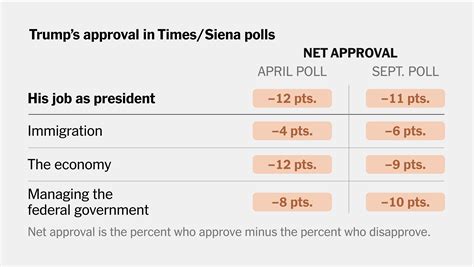
The same survey found equally troubling results for the president’s economic agenda. Only 36 percent approve of Trump’s overall job performance, his lowest rating in any Fox News poll across both presidencies. His approval among Republicans has fallen to 76 percent, down from 92 percent in March 2025.
On inflation, Trump’s approval stands at just 22 percent, while 77 percent disapprove. By comparison, former President Joe Biden received 29 percent approval on inflation before the 2022 midterms.
Nearly three-quarters of voters—74 percent—rate the economy negatively. Another 53 percent expect conditions to worsen next year. Only 18 percent say their families are financially better off than two years ago.
The frustration extends well beyond Democratic voters: Among independents, 52 percent report being worse off financially, while 70 percent expect economic deterioration.
An Associated Press-NORC poll published October 1 found that 65 percent of adults blame Trump’s policies for unusually high prices. Even 52 percent of Republicans say his handling of living costs has fallen short of expectations.
A separate Financial Times-Focaldata survey conducted October 2 through 4 revealed only 25 percent approve of Trump’s economic management, with overall approval at 34 percent.
The findings across multiple polling organizations suggest widespread dissatisfaction. The political implications are becoming clearer: Fox News found Democrats leading Republicans by 54 to 45 percent on the generic congressional ballot, with their nine-point advantage widening from seven points in September. Independents favor Democratic candidates by 26 points. Democrats also lead among younger voters, women, Hispanic voters, and white college graduates.
Republicans retain advantages among older voters, white voters without college degrees, and religious conservatives. An AP-NORC survey released Thursday found 47 percent of voters favor Democratic control of the House compared with 38 percent for Republicans, while another 15 percent remain undecided.
Trump’s approval stood at 36 percent, matching the Fox finding. The survey also revealed that 85 percent consider the economy important to their vote and 84 percent cite the cost of living. A Gallup survey published Tuesday found 51 percent trust Democrats more to keep the country prosperous compared with 37 percent favoring Republicans—a margin representing Democrats’ largest advantage on economic prosperity since 2007.
Both major parties carry negative favorability ratings: Democrats stand at 42 percent favorable and 58 percent unfavorable, while Republicans register 38 percent favorable and 61 percent unfavorable. An October AP-NORC survey found only 38 percent trust Democrats to handle living costs compared with 27 percent for Republicans, with another 27 percent trusting neither party.
The Thursday AP-NORC findings also revealed that eight in 10 voters want substantial change or total upheaval in how the country is run. In other words, voters can reject the governing party without embracing its opposition.
Republican pollster Daron Shaw, who helped conduct the Fox survey, acknowledged the political challenge: “Republicans have time to close these apparent gaps, but it’s getting late.”
The Fox poll surveyed 1,202 registered voters October 9 through 12, with a margin of sampling error of 2.5 percentage points. National polling captures the broader political climate, not individual congressional races.
With Election Day approaching on November 3, the findings point to more than dissatisfaction with one president. They reveal deep public frustration with the institutions, parties, and officials entrusted with governing the country. Whether that frustration produces a Democratic congressional majority remains uncertain. What the polls establish more clearly is that Americans’ distrust of Washington extends well beyond the party currently in power.