
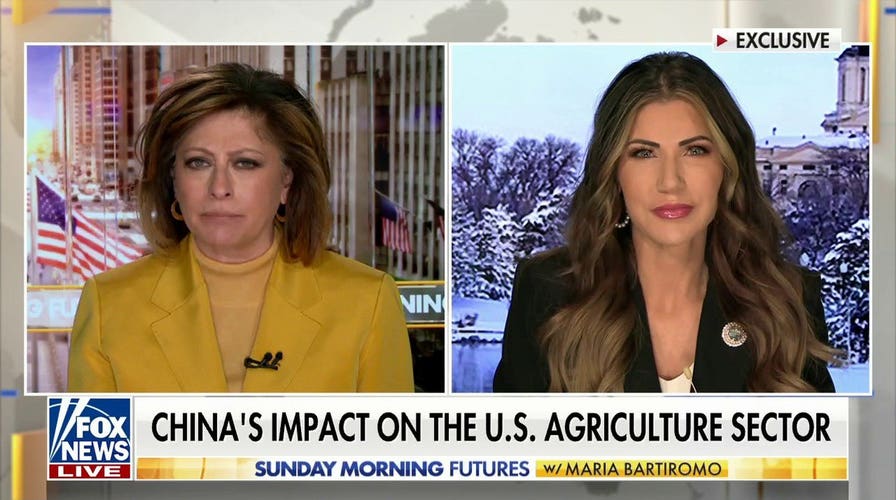
Republican lawmakers and President Donald Trump find themselves in conflict over a critical national security issue: restricting foreign ownership of U.S. farmland.
In May, Representative John Moolenaar (R-Mich.), chairman of the House Select Committee on the Chinese Communist Party (CCP), introduced bipartisan legislation titled “Protecting U.S. Farmland and Sensitive Sites from Foreign Adversaries Act.” The bill would prevent property acquisitions by China and other adversarial nations including Russia, Iran, and North Korea, while extending protections to seaports, telecommunications infrastructure, and land near military installations.
Despite President Trump’s opposition—citing potential harm to agricultural values and farm operations—his own agriculture secretary, Brooke Rollins, has publicly emphasized the dangers of “the consolidation of our farmland” and adversarial foreign ownership “creeping up on our country.” Her warnings align with the administration’s National Farm Security Action Plan, which treats food security as a core national defense priority.
While Chinese-linked entities currently control an estimated 250,000 to 300,000 acres out of America’s nearly 900 million acres of farmland—representing less than three percent of U.S. agricultural land—the rate of growth is alarming. Chinese-held acreage has surged over 400% since 2010. Raw numbers obscure the true threat: strategic locations near military bases or critical infrastructure pose disproportionate risks to defense and supply chains.
A recent case in point involved a Chinese company’s 2022 attempt to build a corn-milling plant near Grand Forks Air Force Base in North Dakota—a move that prompted urgent warnings from lawmakers about espionage and supply chain vulnerabilities.
With Congress stalled between the president’s economic concerns and a growing bipartisan security coalition, states have accelerated action. As of early 2026, more than two dozen states have considered new restrictions on foreign agricultural land ownership. Utah provides a clear example: Republican Governor Spencer Cox signed legislation strengthening bans on adversarial purchases, blocking a deal near Provo Airport involving Cirrus Aircraft—a company majority-owned by a Chinese state-run defense contractor tied to the People’s Liberation Army.
Critics of this approach warn of regulatory fragmentation and reference outdated “alien land laws” from the early 20th century. Supporters counter that current measures target adversarial entities like the CCP, not individuals based on ethnicity.
U.S. farmland remains fundamental to America’s food security and economic independence. Permitting adversaries—particularly the Chinese Communist Party—which has openly pursued strategies to destabilize the United States—to establish footholds on American soil compromises national sovereignty and creates future leverage for hostile foreign powers over the American people.