
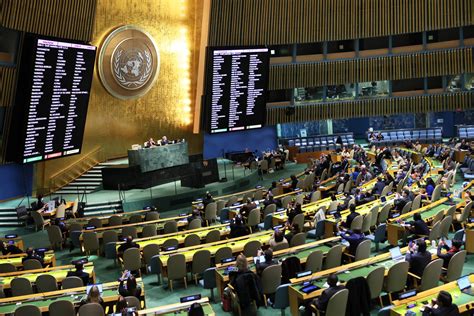
The United Nations General Assembly adopted on October 12 a “political declaration on pandemic prevention, preparedness and response” that explicitly endorses globalism, abortion rights, feminism, and other progressive social policies.
The resolution, designated A/81/L.6, was approved by a vote of 153-3, with New Zealand and Paraguay abstaining. The United States, Israel, and Argentina voted against it.
Originally scheduled for adoption by consensus on September 25, the document faced opposition from several nations, including the United States, which blocked its initial passage, necessitating a roll-call vote on October 12.
In a September 25 address at the UN, Erica Schwartz, director of the U.S. Centers for Disease Control and Prevention, stated that “the United States is not in a position to support this text in full” due to concerns about “divisive ideologies that lack definitional consensus.” The United States requested the removal of specific terms related to equity, solidarity, and universal access to sexual and reproductive health services.
The final resolution promotes international cooperation through multisectoral collaboration among member states and UN entities including the World Health Organization (WHO), international financial institutions, civil society, academia, and philanthropies to address global health emergencies. It also calls for strengthening WHO’s International Health Regulations.
Additional provisions include universal access to sexual and reproductive health care services—specifically abortion, universal health coverage under socialized medicine systems, and gender equality embedded in all policies and programs. The declaration further addresses health-related misinformation by urging measures to counter its negative impacts.
In a statement, the World Health Organization praised the resolution as “a strong reaffirmation of global solidarity and commitment needed to protect future generations from pandemic devastation.”
For those advocating for national sovereignty and traditional values, the adoption highlights perceived conflicts between UN principles and foundational American ideals. The question remains: why does the United States persist in participating in an organization advancing policies at odds with its founding documents?