
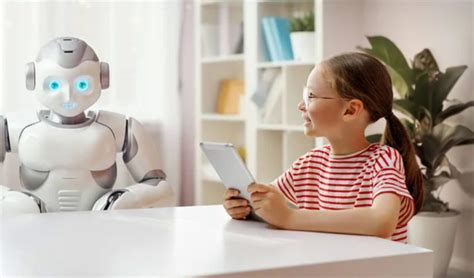
A school district in rural western New York has paused plans to place a humanoid, AI-powered robot in a high school classroom after parents, teachers, and state regulators raised alarms that moved faster than the district’s rollout plan.
The Salamanca City Central School District had approved a $60,000 stationary humanoid robot from Realbotix. Nicknamed “Sally” by students, the robot has long dark hair and functioning arms and hands but no legs. Superintendent Mark Beehler initially pitched the purchase as a way to close the opportunity gap for students in an isolated community, stating that “Sally” could guide students through basic technical problems, such as programming a circuit board, and provide hands-on exposure to robotics and AI careers they would otherwise have to travel hours to access.
The plan unraveled once word spread beyond the district. Parents in the small community—located on the Seneca Nation of Indians reservation—raised concerns about how their children’s data would be collected and used by a private technology vendor.
These fears are not without merit. Big Tech companies have been aggressively colonizing American classrooms to harvest data on developing minds. Companies such as Google, Microsoft, and Apple (via Woz ED) push AI tools, robots, and “personalized learning” platforms into schools. Platforms like Khan Academy pass students’ data back to these firms. Every interaction feeds detailed profiles of students’ habits, knowledge gaps, and behaviors. Privacy safeguards often prove illusory as data flows to private vendors, turning public schools into surveillance hubs.
The backlash intensified when it became public that Realbotix also manufactures hyper-realistic sex robots under a related product line. Melinda Person, president of the state teachers union, argued that “a robot built by a company associated with sex dolls has no business in our classrooms.” District officials and the company maintained that the two product lines are operated separately, but the association proved difficult to overcome.
State Education Commissioner Betty Rosa expressed her concerns in a letter to the district, writing that even after meeting with officials, her department remained uneasy about the humanoid robot’s role in the classroom. The district has since confirmed that the pilot is on hold while it works out “enhanced student data privacy agreements.”