
The Pentagon has urgently demanded defense contractors accelerate weapon deliveries—a request intensifying as the United States confronts severe shortages in essential missiles following five months of conflict with Iran.
A recent analysis by the Center for Strategic and International Studies (CSIS) reveals sharp declines in Patriot and Terminal High Altitude Area Defense (THAAD) interceptor stocks. Simultaneously, the Army has used virtually all of its Army Tactical Missile System (ATACMS) and Precision Strike Missile (PrSM) inventory during the conflict, with replenishment potentially taking years.
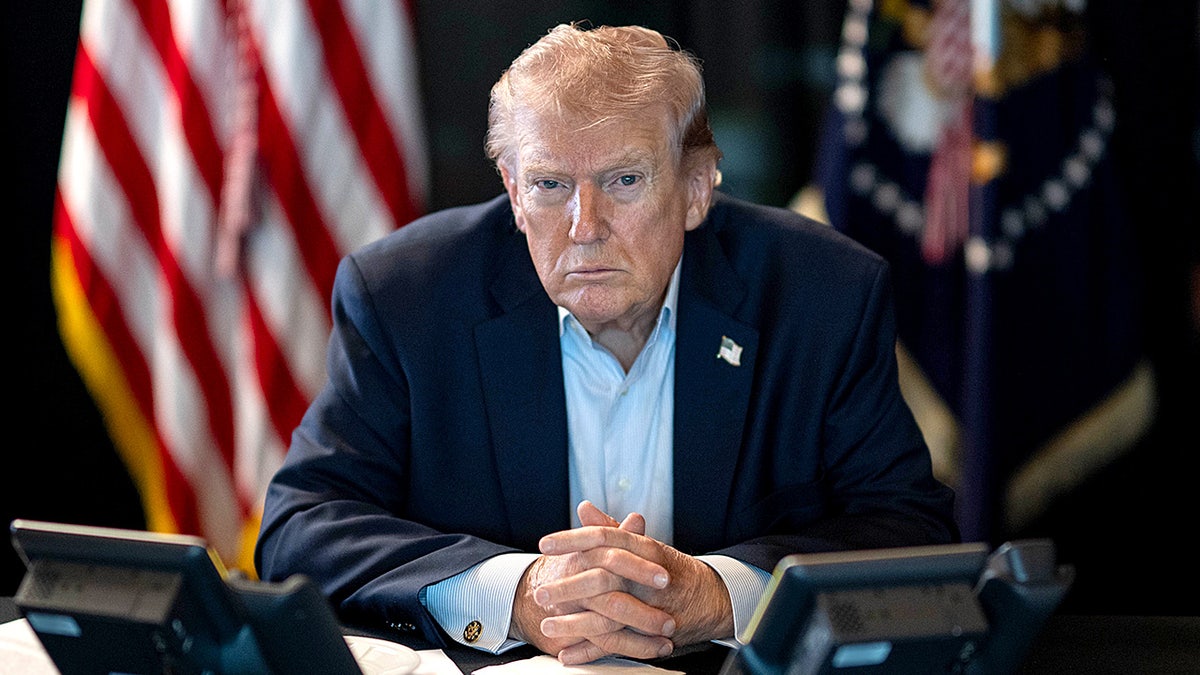
President Donald Trump recently affirmed that the United States remains well-armed but acknowledged a $21 billion supplemental request for munitions, stating, “We always want more” weapons. He also blamed former President Joe Biden for depleting stockpiles through Ukraine support.
While U.S. assistance to Ukraine did reduce stocks of Stinger missiles, Javelins, and 155 mm howitzer ammunition, these shortages reflect preexisting industrial challenges—not the dramatic depletion of Patriot and THAAD interceptors during Trump’s conflicts with Iran.
Last week, Deputy Defense Secretary Steve Feinberg directed defense manufacturers to explain within 21 days how they can speed up deliveries and expand production of critical weapons. The memo emphasized that “years-long development cycles are not acceptable” and called for urgent acceleration of program schedules and increased production capacity. Pentagon spokesperson Sean Parnell confirmed the directive aligns with broader efforts to rebuild the defense industrial base.
In late July, the White House convened meetings with legacy defense contractors and Silicon Valley weapons start-ups to discuss strategies for accelerating military spending through congressional reconciliation. Participants included Defense Secretary Pete Hegseth, White House Chief of Staff Susie Wiles, and Director of the Office of Management and Budget (OMB) Russell Vought.
The Pentagon has already initiated production increases, including a $3 billion agreement with Lockheed Martin and Northrop Grumman to expand Patriot and THAAD component manufacturing. This framework aims to triple Patriot production and quadruple THAAD output. A separate Lockheed contract valued at up to $58.6 billion is intended to significantly boost Patriot interceptor production.
On June 17, Trump invoked the Defense Production Act to expedite weapon production and address supply chain bottlenecks.
The scale of depletion is alarming. The United States began with an estimated 2,330 Patriots before the Iran conflict but dropped to approximately 1,030 by the April ceasefire—reduced further to 759–827 after renewed fighting, representing a decline of about 65 percent. THAAD stocks similarly fell from 452 interceptors pre-conflict to between 232 and 262 at the April ceasefire, with only 234–278 remaining post-replenishment—leaving stockpiles at least 38 percent below prewar levels.
Patriot and THAAD systems serve as critical layers of U.S. missile defense, capable of intercepting ballistic and cruise missiles as well as aircraft. Their depletion threatens military options for protecting troops, bases, and allies.
The offensive arsenal has also suffered severe impacts. The Army used virtually all of its ATACMS and PrSM inventory during the conflict—missiles with ranges of 190 miles (ATACMS) and over 250 miles (PrSM). Their depletion may force greater reliance on riskier aerial missions. Similarly, the Navy has depleted nearly half of its global Tomahawk stockpile, long-range cruise missiles launched from ships and submarines to strike heavily defended targets.
Internal administration tensions have emerged. Trump reportedly clashed with Defense Secretary Pete Hegseth at Camp David over shortages limiting military options against Iran. Later acknowledging the problem directly, he stated, “We have certain types of munitions that are very powerful… we have others where it’s a little bit tighter.”
The shortage was not unexpected. Before launching the Iran conflict, Joint Chiefs Chairman General Dan Caine warned Trump that the United States lacked sufficient stockpiles to sustain prolonged warfare. Trump proceeded with his short-war strategy.
Five months after the conflict began, CSIS estimates rebuilding Patriot, THAAD, and Tomahawk inventories to prewar levels would take at least three years—Patriot missiles ordered for fiscal 2027 are not expected until May 2029. Tomahawk replacements could stretch into late 2030.
While new factories and contracts will eventually increase production, they cannot quickly offset the depletion caused by recent conflicts. The result is a strategic vulnerability that could outlast the Iran conflict. Until arsenals are rebuilt, every new crisis begins with fewer weapons, fewer options, and less margin for error—reducing flexibility in ongoing military operations.
Thus far, the military-industrial complex remains the clear beneficiary as each missile fired empties the arsenal while generating contracts to refill it. Profits accumulate in corporate ledgers, with costs ultimately borne by American taxpayers already facing economic strain.