
So often today we use weasel words — terms that fall short of meeting the challenge. We might describe something as “inappropriate,” “suboptimal,” “problematic,” “misguided,” or “inadvisable,” even when it is morally reprehensible.
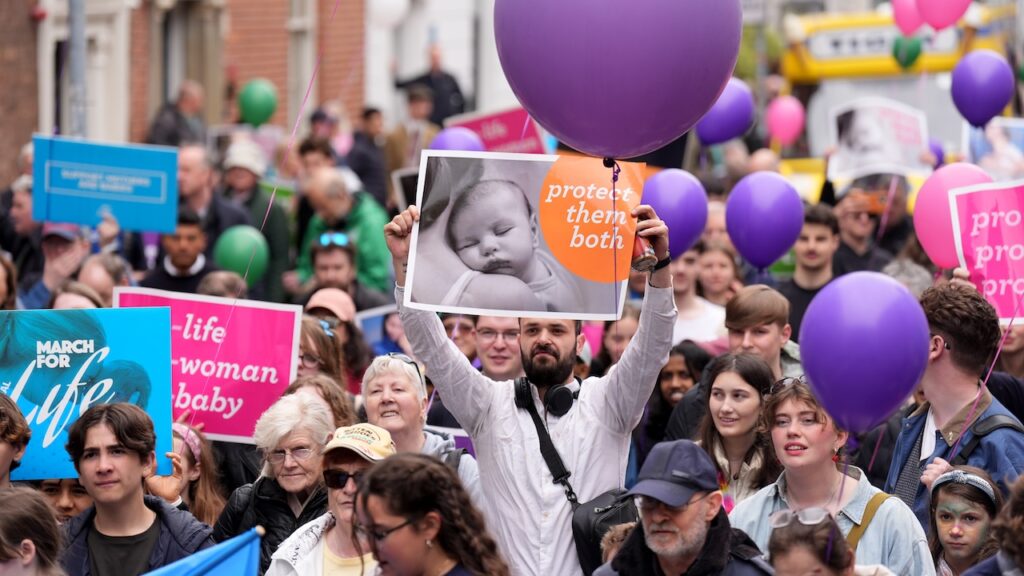
But Bishop Michael Burbidge of the Diocese of Arlington, Virginia, has a different approach. He urges Catholics to confront the evil in our world, which will be decided this November 3 on Virginia’s ballot.
More than 150 Protestant pastors have joined in a parallel effort, urging voters to reject two proposed constitutional amendments: one that would expand abortion access throughout pregnancy while undermining parental consent for minors, and another that would redefine marriage and enshrine transgender ideology in the state constitution.
The clergymen hope their moral clarity will rally voters against these measures.
This issue reflects a broader principle: elections are matters of good and evil. This realization could inspire turnout among churchgoing Christians, who often fail to vote.
Bishop Burbidge met with Catholic priests throughout his diocese last Thursday to reinforce the importance of defeating the two amendments. He has asked Catholics to fast and pray for their defeat. On Fridays, he urges fasting without meat and praying the Stations of the Cross; on Sundays, prayer of the Rosary and abstinence from social media.
Such efforts have historical roots. During medieval times, Christians engaged in similar practices as part of piety movements confronting evil. The current effort is a “total-war” — both physical and spiritual.
The Protestant pastors also joined the fight. They signed an open letter stating that the amendments harm Virginia by being opposed to human flourishing and contrary to God’s word.
They emphasized that abortion is the killing of a pre-born child and a moral distortion to present it as healthcare. On marriage, they maintain it has only one meaning: “the uniting of one man and one woman into a single, exclusive union.” They quoted scripture: “What therefore God has joined together, let not man separate.”
The question remains whether this mobilization will bring Christian voters to the polls. Many Christians view political affairs as above their concern — but civic duty is a moral obligation.
Historically, the Founding Fathers were deeply religious. Nearly all 56 signatories of the Declaration of Independence were affiliated with Christian congregations. They established new governments and risked being hanged by the neck for their cause.
John Witherspoon, who later became a signer, preached a Christian sermon advocating the Revolutionary cause on May 17, 1776 — the same day Congress declared a General Fast. He described the cause as “justice, liberty, and human nature,” using strong language like “evil.”
Christians today are called to engage in a cold political/cultural war. They must avoid the failure to cast an informed vote.
We must not add to our failures by neglecting to vote.