
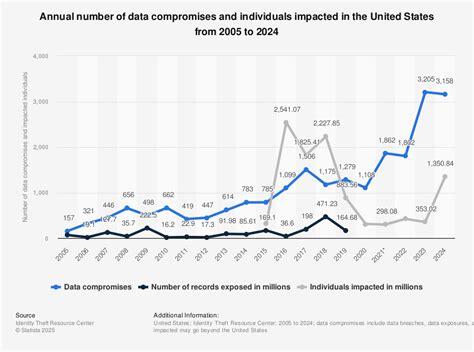
On September 22, a criminal hacking group known as ShinyHunters defaced the FBI’s recruiting website and announced it held “very sensitive data on almost ALL FBI Agents” and individuals who had applied to work there. The FBI confirmed that it was investigating unauthorized activity on FBIjobs.gov.
A week later, the Pentagon disclosed another breach. From October 2025 through July 2026, unauthorized users accessed unencrypted files in a Defense Manpower Data Center system. These files contained Social Security numbers and service details for 2.76 million living individuals and 294,000 deceased persons. The center maintains over 60 million records on military personnel, civilian employees, contractors, veterans, and military families.
The FBI recently classified a breach of its networks used for wiretaps and surveillance as a “major incident.”
These are not peripheral systems but the core infrastructure of a government increasingly defined by what it knows about its citizens.
In March 2025, President Trump signed an executive order directing federal agencies to “eliminate information silos” by granting designated officials full access to unclassified government records. To implement this directive, the administration expanded its partnership with Palantir, the data-analytics firm co-founded by Peter Thiel. Palantir deployed its Foundry software across at least four agencies, integrating Americans’ medical, financial, and other personal records into a unified system. However, the initiative faced significant pushback, including concerns from Palantir’s own engineers about consolidating such massive amounts of sensitive data.
Republicans also raised objections to the overreach.
Indeed, our government has been transformed into a data warehouse built by private contractors and managed by algorithms no voter has chosen. Congress never voted to restructure the federal government this way. The shift occurred through executive orders and procurement contracts, influenced by a small circle of tech billionaires whose power reaches leaders across both parties. When the work of governing moves into systems the public can neither see nor vote on, representative government loses its substance.
A state that insists on knowing everything about its citizens must at least possess the competence to protect what it takes. The FBI could not secure the identities of its own agents. The Pentagon left millions of Social Security numbers unencrypted for nine months before noticing. Centralizing data does not make it safer; it creates a larger target.
Former FBI cyber official Cynthia Kaiser warned that criminals and foreign nation-states could use stolen data to target agents and their families — it is not difficult to imagine such scenarios applying to each American’s merged medical and financial file.
The answer lies not in better firewalls but in less data held by fewer hands, under laws written by Congress and enforced by officials who can be removed by voters. A government run by algorithm is no longer a representative government — it has become an illegitimate authoritarian administrative model and easy pickings for criminal cartels and foreign nations with state-of-the-art hacking units.