
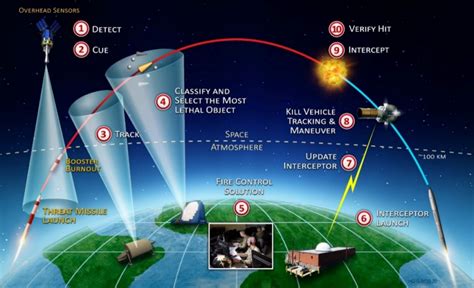
The United States has depleted more than half of its global interceptor stockpiles within less than a year—a stark reality unfolding in what Congress has never authorized as official warfare. Military commanders privately warn that the Pentagon’s munitions reserves are now “dangerously low,” with the U.S. Army having consumed nearly half of its Patriot interceptors and “virtually all” of its long-range surface-to-surface weapons during this conflict.
According to data from the Center for Strategic and International Studies, prewar stockpiles included approximately 2,200 Patriots and 452 THAAD interceptors. Today, the U.S. holds fewer than 827 Patriots and under 278 THAAD systems. Inventory levels for Army Tactical Missile System missiles, Precision Strike Missiles, and Tomahawk cruise missiles have also plummeted significantly. Replenishment rates are critically inadequate: the Pentagon receives roughly 15 new Tomahawks and 20 Patriot missiles monthly, yet analysts estimate it could take three years to restore THAAD stockpiles to prewar levels.
This crisis has already reshaped military strategy. Depleted reserves reportedly influenced decisions to halt planned operations—a direct consequence of dwindling capabilities. The situation reveals a profound strategic inconsistency: U.S. air defense systems deployed across the Middle East have failed to intercept Iranian missiles targeting Israel in recent days, despite prior successful engagements. Meanwhile, American bases in Jordan, Qatar, Kuwait, and Bahrain—hosting thousands of service members—have been struck by Iranian missiles due to insufficient air-defense coverage. Gulf allies now raise urgent concerns about their ability to withstand potential Iranian retaliation, with Jordanian officials demanding U.S. troop withdrawal and cancellation of military agreements, citing inadequate protection for American forces. U.S. casualties in the Iran conflict have surpassed 600, per Stars and Stripes.
Compounding the strain, Patriot systems depleted by regional threats are simultaneously being supplied to Ukraine for defense against Russian missiles—a dual demand the production base cannot sustain. The Center for Strategic and International Studies warns that the greater risk lies not in sustaining current conflicts but in responding to high-intensity crises elsewhere before air-defense capabilities can be rebuilt. Should China move toward Taiwan, Sudan’s instability escalate, or new tensions emerge globally, the United States would enter such operations with critically degraded missile defense readiness—a direct result of an unauthorized conflict whose endpoint remains undefined and whose costs have never been publicly itemized.