
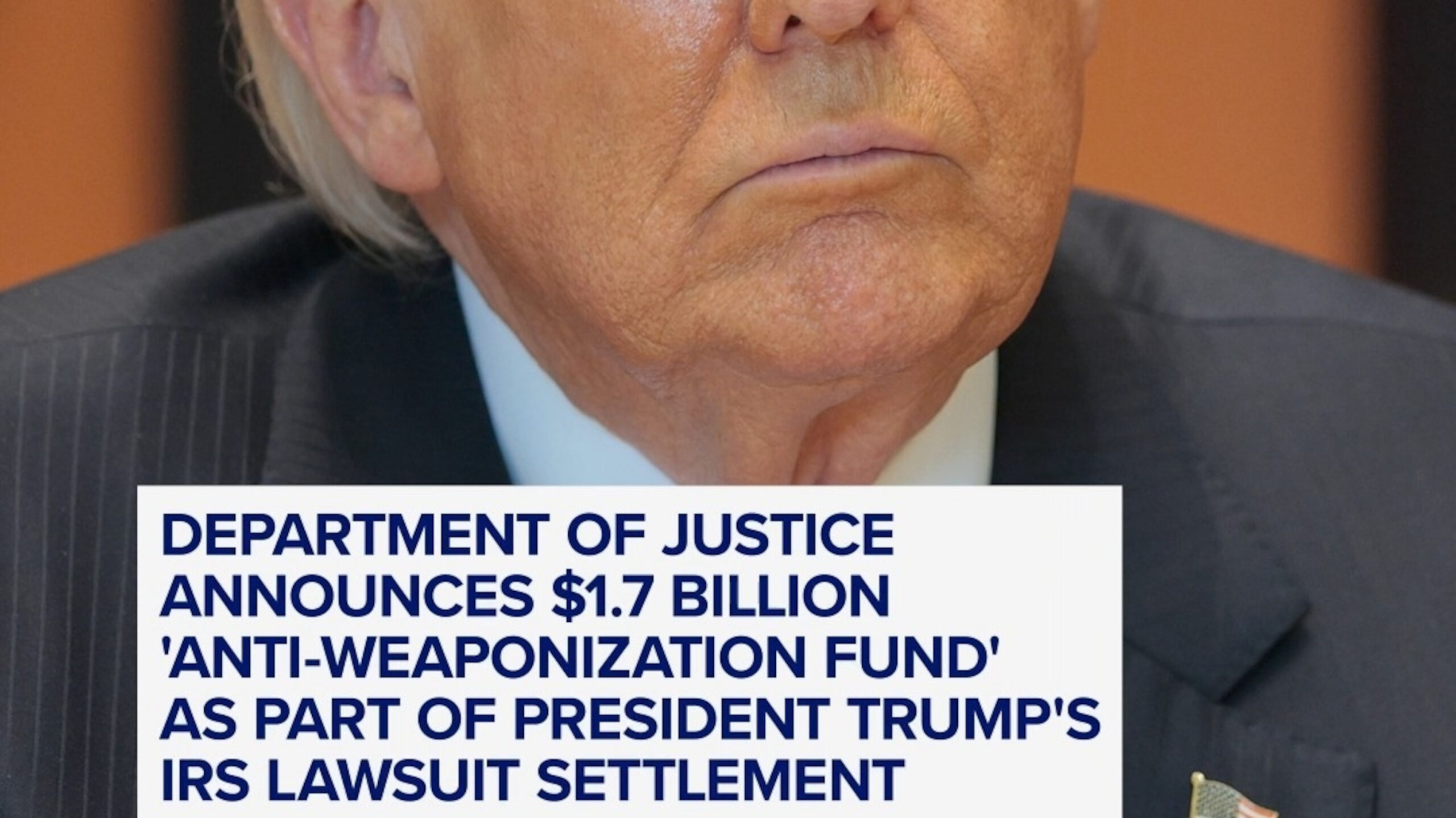
A federal lawsuit challenging the Trump administration’s proposed $1.776 billion “Anti-Weaponization Fund” has escalated into a direct confrontation with the president’s tax immunity order. The amended complaint, filed Thursday in Alexandria, Virginia federal court, adds the National Treasury Employees Union (NTEU) as a plaintiff and targets the Internal Revenue Service (IRS) chief executive Frank Bisignano as a defendant.
The union argues that the settlement—which grants the president, his sons, and business entities immunity from federal tax audits—forces IRS career civil servants to choose between obeying political superiors or adhering to federal law. This controversy stems from Trump’s $10 billion lawsuit against the IRS over tax record disclosure, which the administration “settled” in May by dismissing the case and withdrawing claims tied to alleged Mar-a-Lago raids and Russia-related allegations.
The settlement included a DOJ order establishing the Anti-Weaponization Fund, which would receive $1.776 billion from federal funds to compensate individuals claiming government targeting for “political, personal or ideological reasons.” Acting Attorney General Todd Blanche described it as a lawful mechanism for victims of government weaponization with no partisan requirements.
The lawsuit disputes this characterization, noting settlement language explicitly defines “lawfare and weaponization” around conduct by Democratic officials and government personnel. Plaintiffs assert the arrangement violates the First and Fifth Amendments by favoring one political viewpoint and undermining federal law. U.S. District Judge Leonie Brinkema has already blocked implementation of the fund while litigation continues.
In August, Blanche abruptly rescinded the order establishing the fund after Republican opposition threatened his confirmation, though he had previously refused to terminate it in early July, claiming “there was nothing to reverse.” The amended lawsuit now targets another component of the May 19 settlement: a sweeping release from federal claims that grants immunity to Trump and related entities—including family members, trusts, subsidiaries, and affiliated businesses—from ongoing IRS audits.
Plaintiffs contend this order would compel IRS auditors to terminate audits against Trump’s taxpayers “unlawfully,” violating federal law that prohibits presidential interference in tax examinations. Under 26 U.S.C. § 7217, officials may not request audit terminations for specific taxpayers without risking disciplinary action. The complaint further argues the immunity order constitutes a constitutional violation under the Domestic Emoluments Clause by granting Trump an unaccountable benefit beyond his official compensation.
The lawsuit also follows July rulings from U.S. District Judge Kathleen Williams, who found Trump’s IRS lawsuit was filed for “improper purpose” and used as a vehicle to achieve predetermined outcomes rather than genuine litigation. The plaintiffs seek permanent judicial review of both the Anti-Weaponization Fund and tax immunity order, urging Brinkema to block further implementation, prohibit enforcement of the order, and declare it unconstitutional and unlawful.
The case now centers on whether the administration’s settlement—which critics describe as giving Trump “access to taxpayer funds” while exempting him from standard audits—represents a dangerous precedent for federal law enforcement and constitutional accountability.