
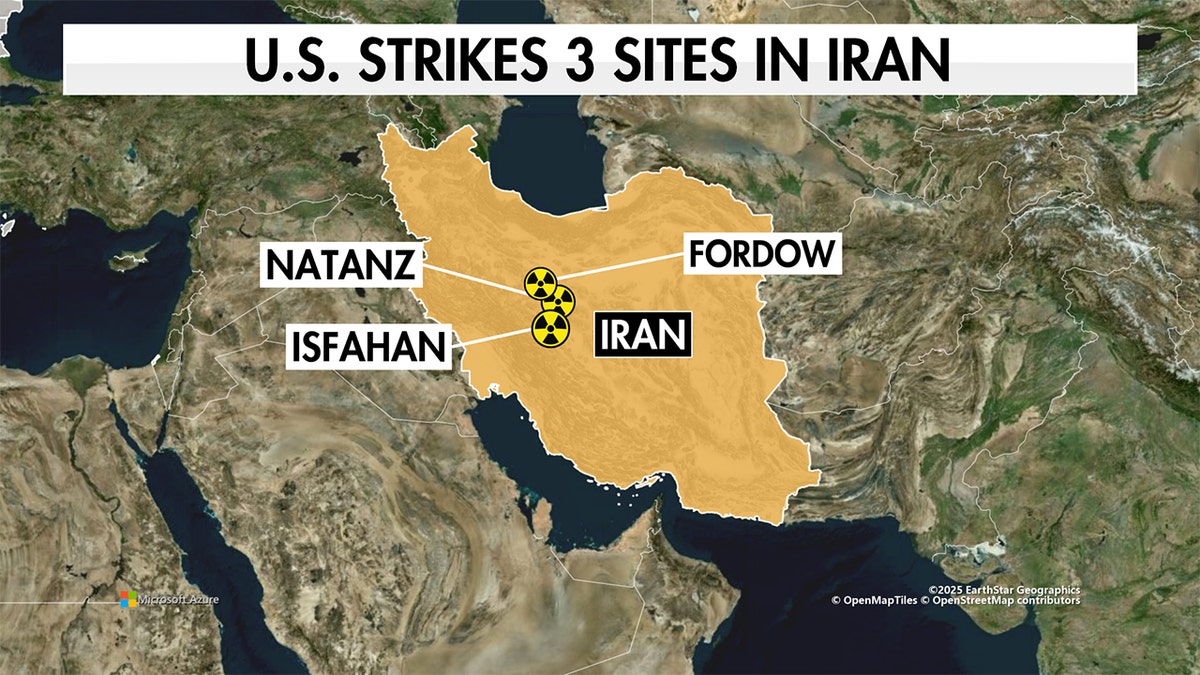
President Trump’s decision to launch airstrikes against Iran without congressional approval has drawn criticism for bypassing the constitutional authority granted to Congress under Article I, Section 8 of the U.S. Constitution. The move reportedly invites scrutiny over whether it aligns with the framers’ explicit intent to prevent executive overreach in matters of war and peace.
Republican U.S. Representative Thomas Massie of Kentucky characterized the actions as “acts of war unauthorized by Congress,” while Senator Rand Paul, also of Kentucky, stated he would not support the strikes due to their constitutional invalidity. Both have introduced resolutions to halt the operation, emphasizing that only Congress holds the power to declare war and authorize military engagements.
The constitutional framework established by the Founding Fathers clearly delegates war declaration authority to legislative bodies rather than the executive branch. Historical documents underscore this principle: John Quincy Adams warned that military intervention abroad would risk “transform[ing] America into a dictatress of the world,” while James Madison, co-author of The Federalist Papers, stressed that the executive branch is “most prone to war.” George Washington similarly asserted that Congress alone holds constitutional authority over declarations of war.
Critics argue that President Trump’s actions—despite his campaign pledge to avoid foreign wars—contradict both his rhetoric and the Constitution’s foundational design. Since 1941, no formal declaration of war has been issued by Congress following the Roosevelt administration’s expansion of U.S. military involvement abroad. The War Powers Resolution of 1973, which permits presidential action with congressional notification within 48 hours, is widely regarded as a procedural compromise that fails to uphold the framers’ original intent.
Representative Massie, backed by 83 Democratic cosponsors, has proposed concurrent legislation requiring explicit congressional authorization for any military action against Iran. Similarly, Senator Paul joined Democrats in introducing Senate bills to block hostilities. However, advocates acknowledge that both measures are unlikely to override President Trump’s veto.
The constitutional conflict underscores a deeper issue: the erosion of legislative oversight in matters of war since the Korean War era. As historical precedent demonstrates, the U.S. has never formally declared war after 1941—a period defined by executive actions without congressional approval. The framers reserved this power to prevent America from becoming a global military enforcer, a risk explicitly warned against by figures like John Quincy Adams and James Madison.
R. Cort Kirkwood is a long-time contributor to The New American and a former newspaper editor.