
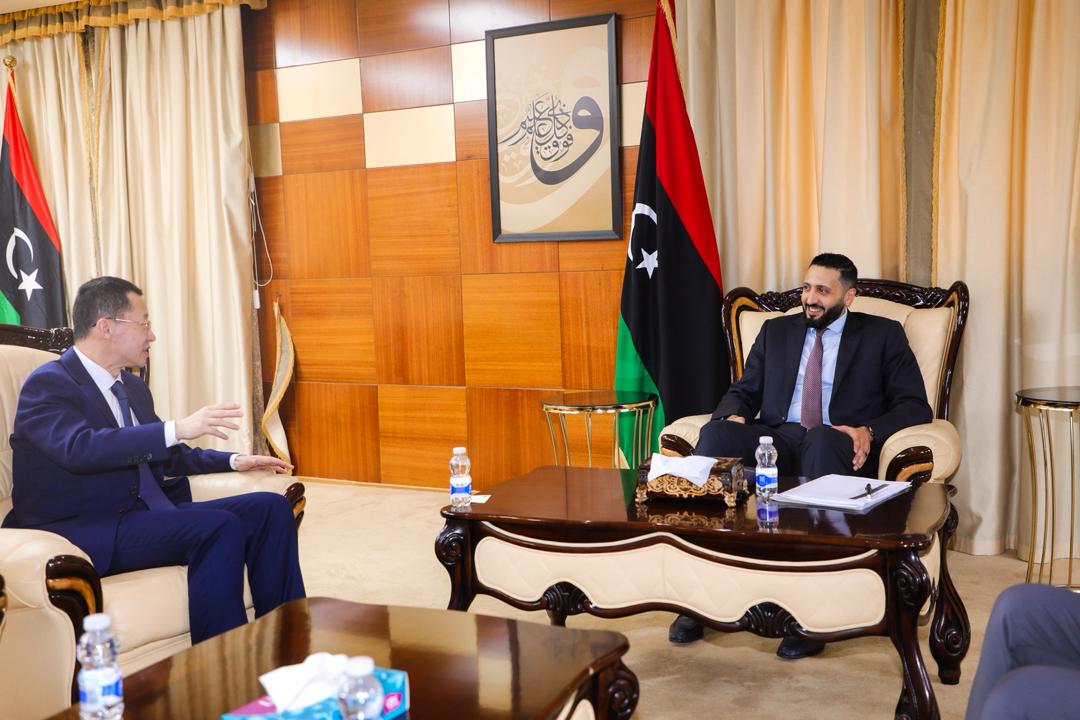
On July 19, Libya’s Central Bank Governor Naji Mohammed Issa met with Chinese counterpart Pan Gongsheng in Beijing to sign an agreement linking Libyan commercial banks to China’s Cross-Border Interbank Payment System (CIPS). The deal enables direct yuan transfers between Libya and China, eliminates the need for dollar-based intermediaries, allows letters of credit to be processed through Chinese banks, and grants Libya access to China’s bond market. A bilateral banking forum is scheduled for early 2027 alongside the China-Africa Forum.
Libya, a small economy, has a single agreement with Beijing that will not significantly undermine the dollar’s global standing. Yet Libya exemplifies a broader shift in international finance. Economist Edward Fishman’s Chokepoints: American Power in the Age of Economic Warfare details how the United States weaponized its dominance over the global financial system after September 11, 2001. Post-9/11, successive administrations leveraged control of critical infrastructure—including the Society for Worldwide Interbank Financial Telecommunication (SWIFT) and U.S. banks—to impose sanctions by cutting off nations, companies, or individuals from global trade.
Countries including Iran, Russia, Venezuela, North Korea, and dozens more have faced isolation from SWIFT, asset freezes, and central bank sanctions. The message was clear: access to the global financial system is a privilege Washington can revoke at will. Fishman argues this U.S.-led choke point has weakened due to repeated use. Nations subjected to sanctions—and those watching others targeted—have developed incentives to build alternatives. China’s CIPS, launched in 2015, represents the most significant institutional response.
The dollar’s post-World War II dominance rested on U.S. leadership at Bretton Woods in 1944. This unipolar moment lasted approximately three decades until resentment from the Global South grew. Russia’s removal from SWIFT following its invasion of Ukraine marked a watershed: for the first time, a major nuclear power with significant commodity exports was fully severed from the dollar system. The response? A political bloc—the BRICS nations (Brazil, Russia, India, China, and South Africa) expanded to include the United Arab Emirates, Iran, Egypt, and Ethiopia—while CIPS became its financial backbone. Libya’s participation adds a critical “brick” to this structure.
Libya’s case is particularly ironic. The country’s current government emerged largely through 2011 NATO intervention—a war conducted without U.S. congressional authorization, justified by humanitarian rhetoric, and executed via airstrikes that toppled Muammar Gadhafi. Diplomatic cables reveal Gadhafi had aimed to create a gold-backed African currency for oil transactions, an ambition that made him vulnerable to overthrow. Now, Libya quietly pursues financial sovereignty through legitimate banking agreements with Beijing.
Economic expert Abu Bakr al-Tour noted U.S. pressure on this agreement is unlikely in the short term due to limited trade volume between Libya and China. This reflects a broader trend: dollar hegemony erodes not through dramatic confrontations but via countless small agreements that collectively reshape global finance—from Saudi Arabia accepting yuan for oil sales to India settling Russian energy purchases in rupees, UAE deepening CIPS connections, Brazil and China trading directly in their currencies, and now Libya.
The path forward for the dollar remains long. Yet as Fishman documents, the choke points once wielded by Washington are being systematically bypassed by a Global South that has grown adept at building alternatives after witnessing American financial power as a weapon.