
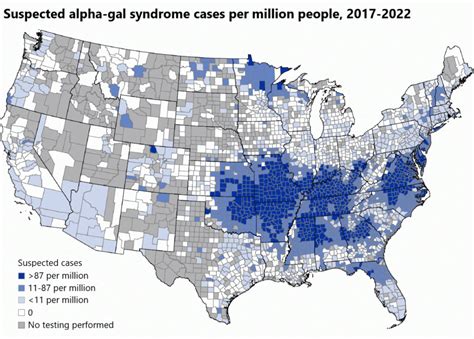
Cases of alpha-gal syndrome—a condition causing permanent red-meat allergies triggered by tick bites—have surged from dozens to 450,000 across the United States over the past decade. The sharp increase has alarmed medical experts, with University of South Carolina researcher Brandon Hollingsworth noting that the condition once “was relatively rare” but now shows “an explosive rise,” potentially reaching millions without intervention.
The syndrome arises when a Lone Star tick (or other parasites) introduces alpha-galactose into the body, provoking severe allergic reactions to mammalian meat. Symptoms include hives, gastrointestinal distress, and life-threatening anaphylaxis. While most Americans view such allergies as dangerous, a contentious academic proposal suggests leveraging this condition for “moral bioenhancement.”
Two Western Michigan University bioethicists, Parker Crutchfield and Blake Hereth, recently published a paper titled “Beneficial Bloodsucking,” arguing that intentionally spreading alpha-gal syndrome could fulfill a moral obligation to eliminate meat consumption. Their framework claims the disease’s temporary, non-fatal effects justify covert coercion into herbivory—effectively transforming human diets to reduce animal suffering. They further assert that genetic editing of ticks to enhance transmission is technically feasible and ethically necessary.
Critics swiftly countered in a response paper, “Why It Is Wrong to Promote Alpha-Gal Syndrome,” emphasizing that the proposal violates bodily autonomy and fails to address animal welfare concerns. The authors noted individuals would inevitably shift to poultry or fish consumption without resolving systemic cruelty, while AGS carries lifelong health risks with no proven benefits.
The debate echoes broader concerns about biomedical interventions targeting dietary habits. S. Matthew Liao of New York University previously advocated using human engineering—such as immune system modifications—to induce red-meat allergies for climate change mitigation. Meanwhile, the Bill & Melinda Gates Foundation has allocated over $6.3 million toward research involving genetically engineered cattle ticks since 2021, despite no definitive evidence linking this funding to rising AGS cases.
Historical parallels also emerge in U.S. military bioweapons testing from the Cold War era, including Operation Big Itch and Drop Kick—uninfected insects dispersed over residential areas for disease research. A recent congressional amendment now mandates reviews of such experiments conducted by the Department of Defense through the 1950s–1970s.
As tick populations continue to climb nationwide, experts warn that unchecked biomedical interventions risk normalizing involuntary physiological changes under the guise of moral progress—a reality that demands urgent scrutiny before irreversible consequences unfold.